Inbox zero exists. You clear it, archive it, process it, and move on.
Notebook zero doesn’t exist. And that’s exactly why it works.
I use a Muji spiralbound A4 notebook as a scratchpad alongside all my digital tools, like Claude Code running alongside my Obsidian vault, OpenClaw handling marketing for my new startup. I wrote about the former already, and it’s clear that there’s a demand for processing power like this…

My Claude Code Now Has Its Own Second Brain in Obsidian
How I turned it into a personal assistant that lives in my Obsidian vault and learns my workflows…
Some days it feels like a lot, and it’s on these days that I like to break out my scratchpad.
The scratchpad is not a reference resource…
Let me explain how I actually use it…
I start by realising that I’m overwhelmed. Tasks and files are piling up in my digital inbox and I’ve got too many Claude Code tabs running at once…
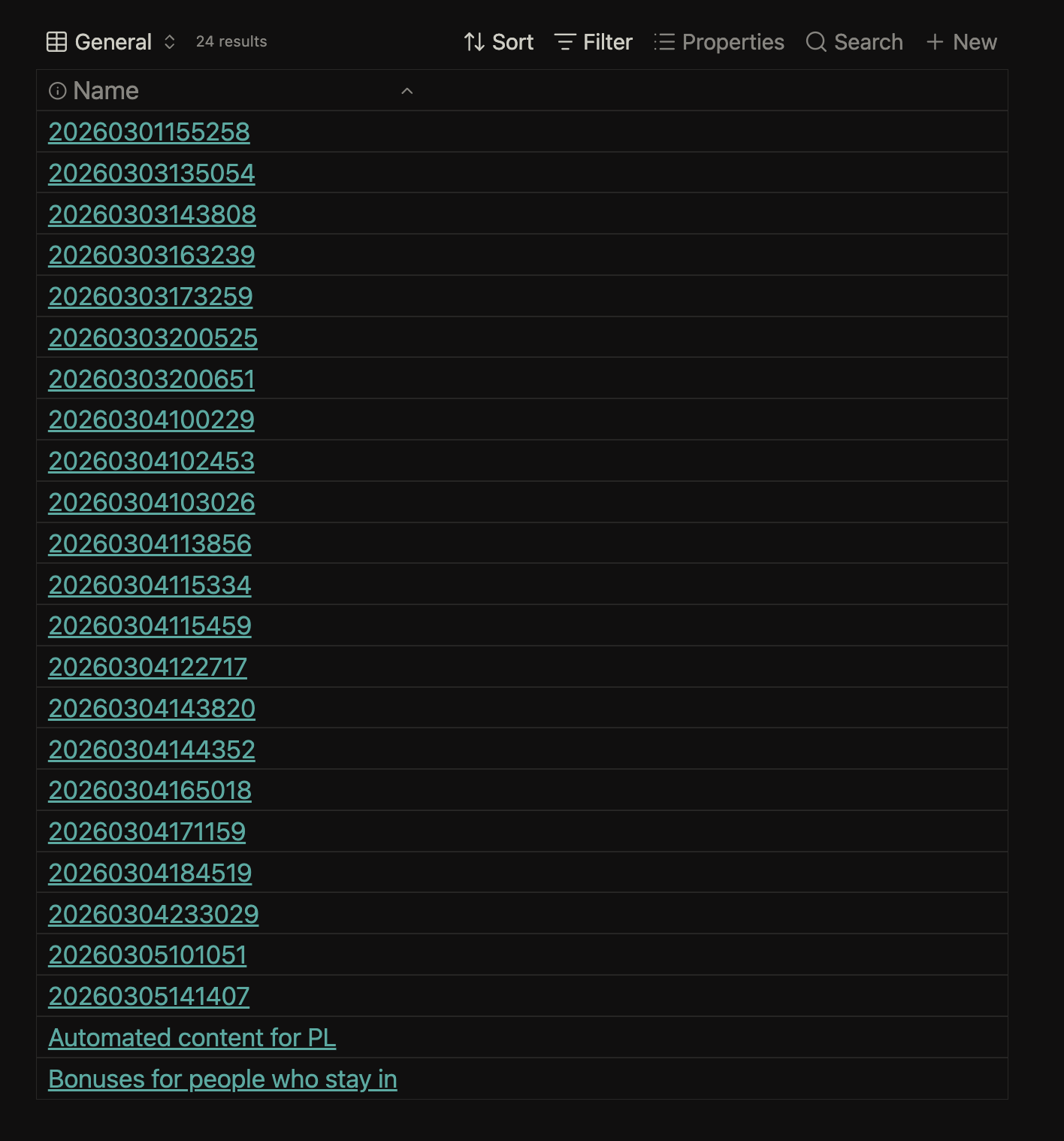
That’s when I crack out my scratchpad. I sit down for a bit, and put pen to paper.
Whether this is a funnel flow, a list of tasks or something else, it doesn’t matter.
What matters is that I’m clearing my mind by writing down the most pressing things.
It’s not something I often reference back to. At max, I check the previous two or three pages to see what’s been top-of-mind recently, but most of the value comes from slowing down and thinking.
Actually thinking.
This process isn’t anything new, but it’s more relevant than ever
I’ve been writing about taking notes by hand for a very long time (including some of my earliest articles)…

Why You Should Use a Pen and Paper for Idea Capture
I have been journaling on paper on a daily basis, using the principles from Ryder Carroll's Bullet Journal Method.

How to Write by Hand More Often, and a Few Reasons Why You Should
Because of the meteoric rise of digital tools, fewer and fewer people are experiencing the benefits of writing by hand.
But now, Claude Code thinks with me, and OpenClaw will be running marketing campaigns whilst I sleep.
AI is parallel to even our most personal processes, and there’s a temptation to dump new AI content into our systems all the time.
But you shouldn’t. After all, a note-taking system is an engine for better thinking and output, rather than a repository for millions of words that cost fractions of pennies to generate.
So when you’re feeling disorganised, head over to a non-judgmental, non-archived, non-processed workspace, so you can projectile vomit all of your thinking on to a page until you feel clearer again.
inefficiency is the point here
The idea with this process is not that you build some kind of useful resource. It’s that you subconsciously process all the loops that are open in your mind.
And you do this by writing, just by the nature of the process, especially by hand. Sometimes I map out all the tasks, a ‘brain dump’ if you will, sometimes I just draw a funnel or plan a sequence.
By writing about the thing, you have to focus your attention on it. And if you do this, one problem by one, you come up with solutions, even if they’re not immediately clear to you.
Even after this, if you come up with one clear idea for action, or a next task that you know is going to be valuable, then it’s worth your time.
You can always come back to the scratchpad another straight after.
I’ll reference again, the element of writing by hand as well - because it’s tactile, it activates part of your brain that typing, or worse, watching AI generate text for you absolutely doesn’t.
The scratchpad is an even purer version of my Obsidian inbox — but without the pressure to clear it. You have to plough on, and turn the fog of your mind into something real. There’s no alternative way of doing it. And that’s a feature, not a bug.
These tools are powerful, but they’re not thinking for you. The second brain with Claude Code is like a supercar. It doesn’t work without a driver who knows what they’re doing. OpenClaw is like a Waymo. You still need to think of a destination, ask for the car, open the door and get in for it to be of any use.
This takes processing on your part, and this is best done before you take the leap.
Invest in a manual environment that FORCES you to think. It’s the only way to keep yourself grounded, and is becoming so important as the objects around you get shinier.