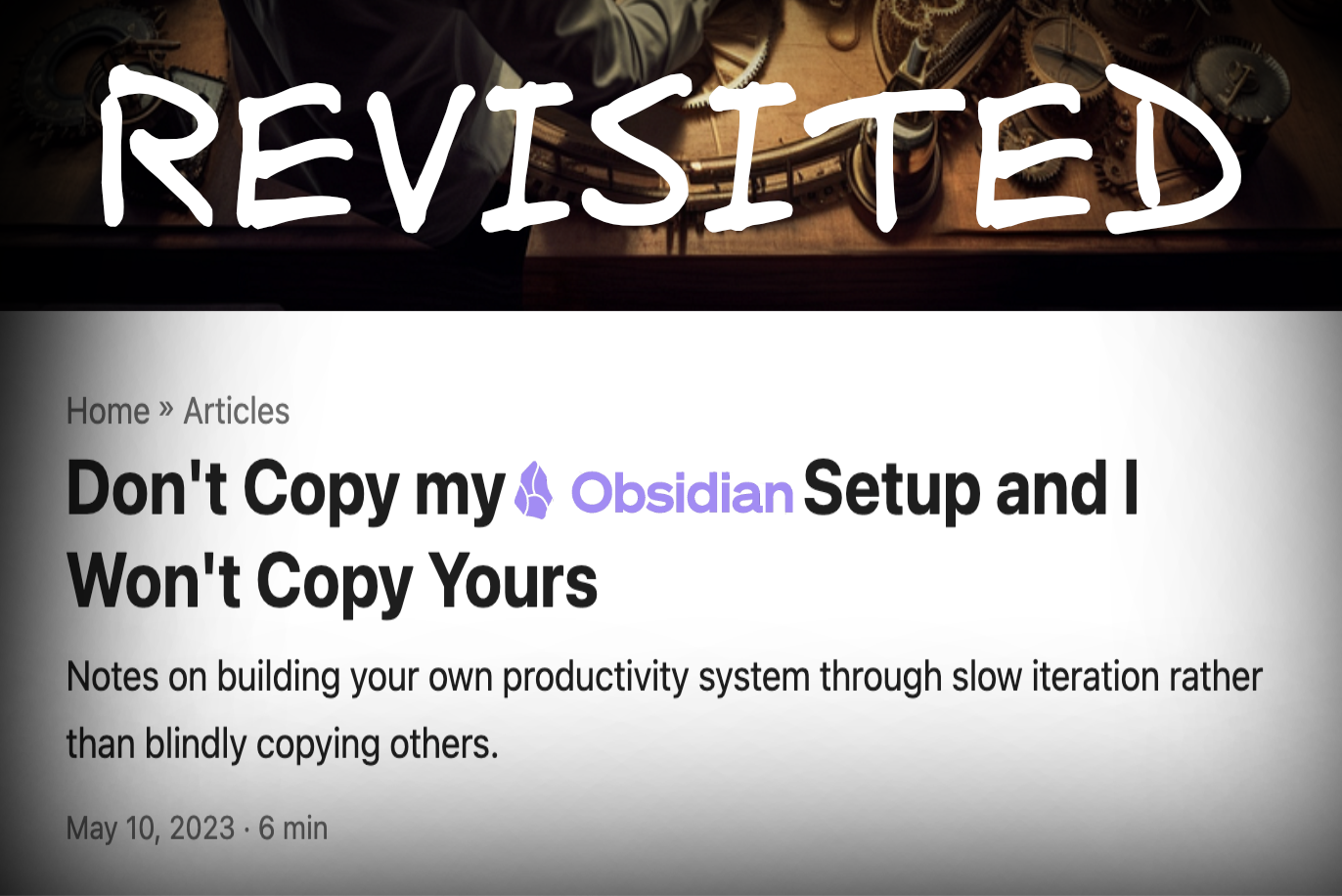
As one of the very first pieces I wrote about note-taking on the internet, I begged people not to copy the configuration of my own note-taking system that I was sharing them most times I published…

Notes on building your own productivity system through slow iteration rather than blindly copying others.
The above article went out in May 2023. Today I wanted to touch on its topic again, partly because it’s a whole three years later, and partly because it ties into what I wrote about when I said that I was stopping selling my flagship Obsidian vault template in May 2026.
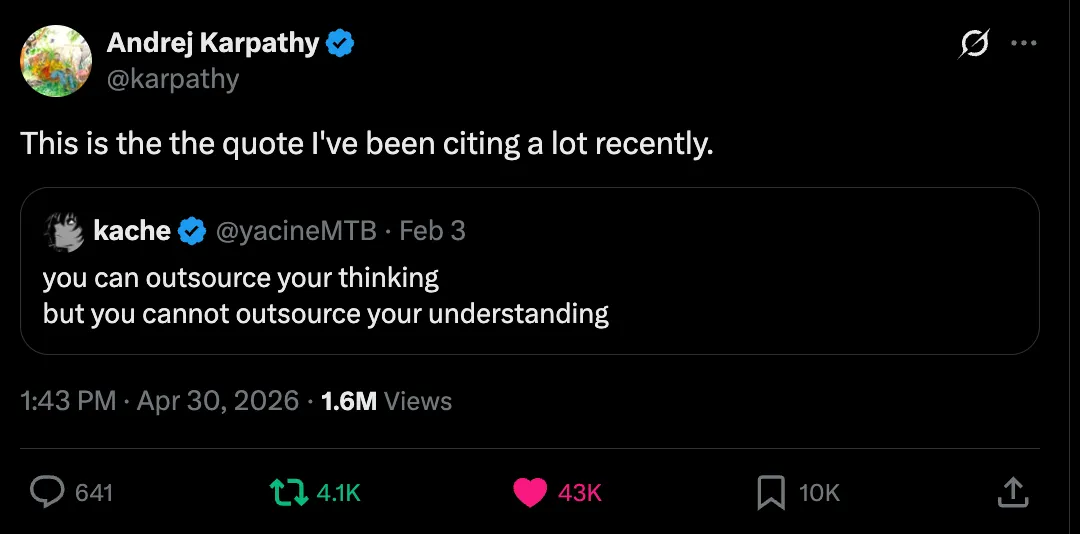
As a summary - we talk about how when you use a done-for-you system for notes there’s no personal touch. You can’t outsource your understanding to a framework you didn’t personally develop.
But let’s back-pedal for a moment, so I can ask you a question…
What’s the most important aspect of a note-taking practice?
This could be a few things, and I was going to write some of the options as part fo the question, but that would have looked like what’s more important, the app you’re using or the folders you use to store your notes in?, and I hope we’re beyond the point of wondering whether there’s a magic app out there that’s going to do all the work for us.
What really does matter when you’re taking notes, though, are the principles that you hold beneath all the external elements.
Are you taking notes minimally? So that you’ve got less overhead in terms of ‘maintaining’ a PKM system, so you can get deeper into creative work?
Do you keep things slow and steady when you’re trying out new features? Rather than rushing towards the newest shiny template or app, designed to look more appetising than it actually is…
Do you download templates and done-for-you solutions hoping that they’ll help you clean up the scattered information you were working with previously?
Here’s why building out your own PKM system, no matter how simple, is more sustainable than relying on other people’s expertise…
Principles beat copying - it’s ‘understanding’ vs ‘knowledge’
This is true for pretty much anything. There’s a comparison that I like to make, of having knowledge versus having understanding (one’s much more valuable than the other, and still needs to be earned)…
Knowledge is very, very cheap, to the extent that the whole of the world is in front of your face now with a query. Which is the same as how you can develop any kind of folder structure system with the touch of a button now with Claude Code or any other agent that works with your notes.
The Obsidian vault I built over four years contains the memories of decisions I reversed, structures that broke under pressure and got rebuilt.
If an AI built your system, there’s no you baked into the structure, which means that, although you might know how the system is set up, you don’t understand how to use it…
Where the understanding comes from is a first-person perspective. Working towards your projects in a simple system that you develop true to yourself over time is much more sustainable. You here manage to develop a system that’s built based on real experience of how your projects get completed, and this is understanding.
Now although this is our priority, I’m not going ahead and saying that it’s pointless to check out others’ systems. You can still find value…
Learn from other people’s systems, but don’t copy them
The other day I read a piece from NoteLab called PKM is a Practice, Not a Product: You Can’t Buy a Done-For-You System.
The main point was that you have to actually do the work to be able to make a PKM system useful (which we’ve now discussed).
But you can of course download systems and templates (I used to sell one) and the best thing I suggest you do with these is learn from them.
Rather than installing and outsourcing all of your organisation and structure to something that you haven’t developed from the inside, see how the builder has set things up, and steal the bits that you think you’d find useful.
When it comes to your own system, start with something minimal, and then after that point develop it every now and then, when you think you need a new feature or when you think that you are ready to advance or bring in a little bit more complexity.
The reason that this works is because principles are more valuable assets than third-party files and folders. They make sure you’ve got understanding and not just knowledge about the system.
The whole idea of this piece is why I’ve changed the direction of PARAZETTEL’s teaching subtly, which I explain below…
Why I shut down my flagship Obsidian template
The lesson behind this article is the main reason I wrapped up selling my flagship Obsidian template a couple of months ago as well…
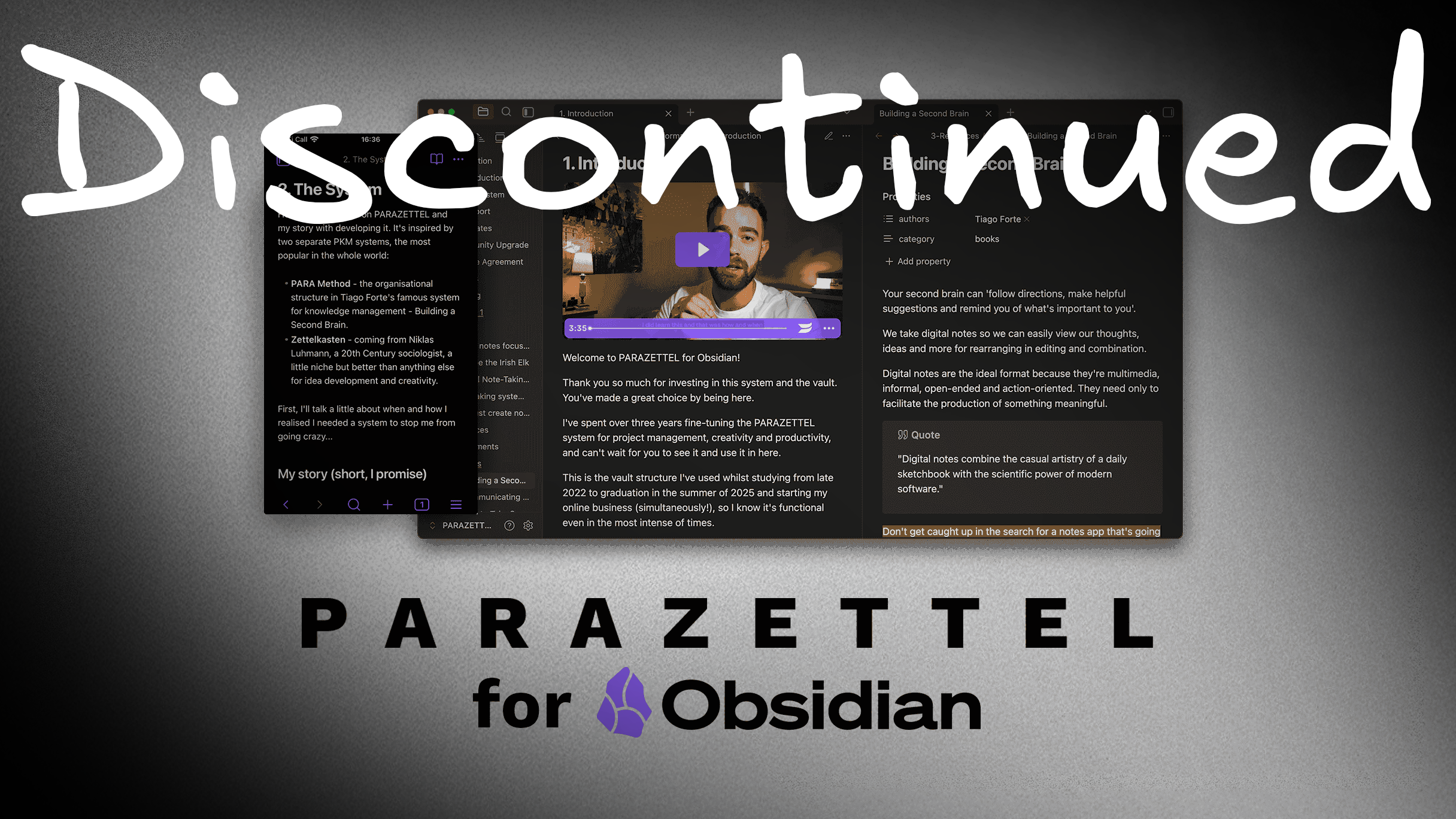
The era of PARAZETTEL for Obsidian is finished. Here's what's next...
Instead of giving you a template to try and inspire some changes in your own PKM, I’ve transitioned entirely to teaching the foundations of personal knowledge management:
PARAZETTEL Foundations (my new program) talks about how to set Obsidian up for the first time in its minimal possible system, develop it so that you are able to learn for yourself, and build a system for yourself that is functional for your work, rather than something that’s dumped in your lap.
I hope that people were able to take inspiration from the PARAZETTEL for Obsidian template, and even use it a little (as it was designed not just for education but for use).
The next evolution is building a personal and customised system for your own projects, which is the real priority with all of this PKM.
You can learn more about PARAZETTEL Foundations below, including getting a sneak peek into one of the lessons, as well as exclusive insights I only share by email…