
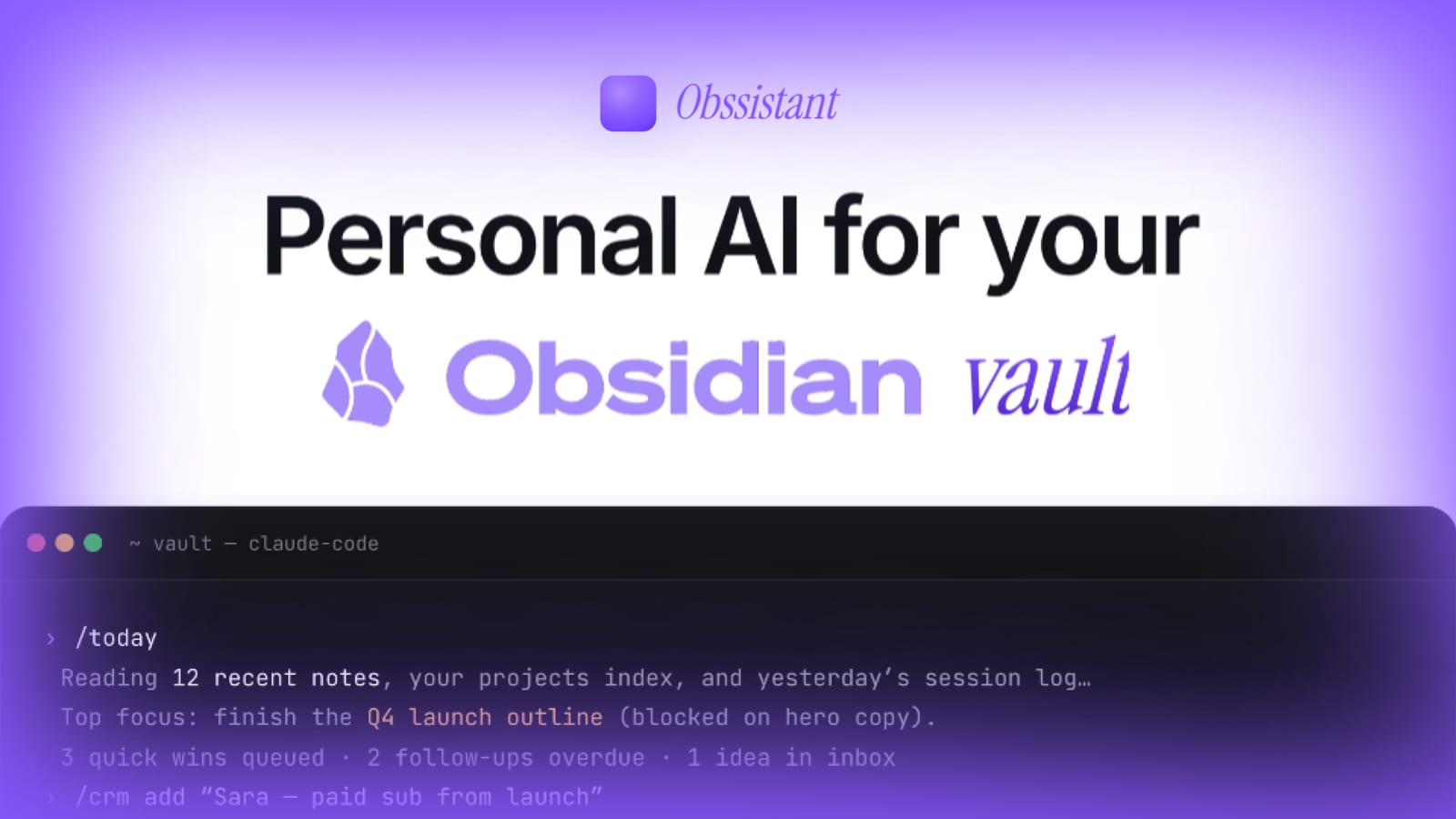
I’ve been using Obsidian since the middle of 2022, and I’ve watched it go through a few distinct phases.
The last major one was probably last summer, when the team released Obsidian Bases, making it a native way to view notes in a list, table or gallery based around YAML metadata properties.
But since 2026 rolled around, I think Obsidian has started going through its most important step up in relevance since I started.
Of course, I’m talking about using it as a knowledge base for AI agents, as I’ve been talking about a lot recently.
If you want the longer version of the story, you can browse my AI articles. Today we’re going to cover a condensed version of this timeline, and talk about why I think that this progression is turning out to be so important…
The earliest AI adoption (2023)
Back at the start of 2023, I was writing for the first time. One of the first articles I put out that became popular was about using the QuickAdd plugin to generate written content through the then-new OpenAI API…

I use four prompts that replicate the action of a real-life editing team, inspired by WritingGPT by Thomas Smith...
It did well, so I wrote about AI in Obsidian (or at least what primitive version of this existed then) some more. At the time, I postulated that it was not really a useful tool, more a proof of concept of what was available…
It's not giving the AI free reign over a project either...
For a long time, that was right - the tools did not change enough to become part of how I worked. I wrote more about how AI was not really working for me, and kept getting on with the rest of my life…
Back when I started writing on the internet, I had a lot of engagement around my articles talking about AI.
That stayed true until the end of last year, when I published this:

After keeping my distance, AI has crept into my workflows, and I thought you should hear about it...
AI had moved beyond a chatbot in a sidebar, in that agents could finally work with local files, without having to upload them, including the Markdown files that make up an Obsidian vault. That was the tipping point, once I realised that the context that my vault gathered was going to be incorporated into agents’ knowledge without any extra effort.
And it turns out, even with these advancements, it’s still said context that’s the most important part of using AI and Obsidian in conjunction effectively…
The foundation is still the foundation
Good personal knowledge management is still the moat to getting better results than most out of these integrated agents. Everyone has access to the same models, but not everyone has access to the data that can be provided. Anthropic cannot give you years of observations, decisions, writing, project history, and personal context (yet).
So you still need to capture it well yourself - a vault full of someone else’s content, half-finished templates, and notes you never get back to completing is not suddenly useful because an agent can search it faster.
That is why I still focus on the foundations of personal knowledge management. The new layer makes the system more useful but by no means provides a substitution for doing the correct thing at first…
Why Obsidian fits the new age
AI agents can now read files stored on our computers. Information does not have to live in the cloud, inside one platform, or behind a proprietary interface for an agent to work with it.
We can use tools that write plain markdown - Obsidian happened to have the right idea and built up a fantastic app around the File over app, and it has become the most mature and powerful way to manage the knowledge that now forms the basis of PKM x Agent configurations.
My first proper look at this was more about how an agent would store information and learn how to work with me:

How I turned it into a personal assistant that lives in my Obsidian vault and learns my workflows…
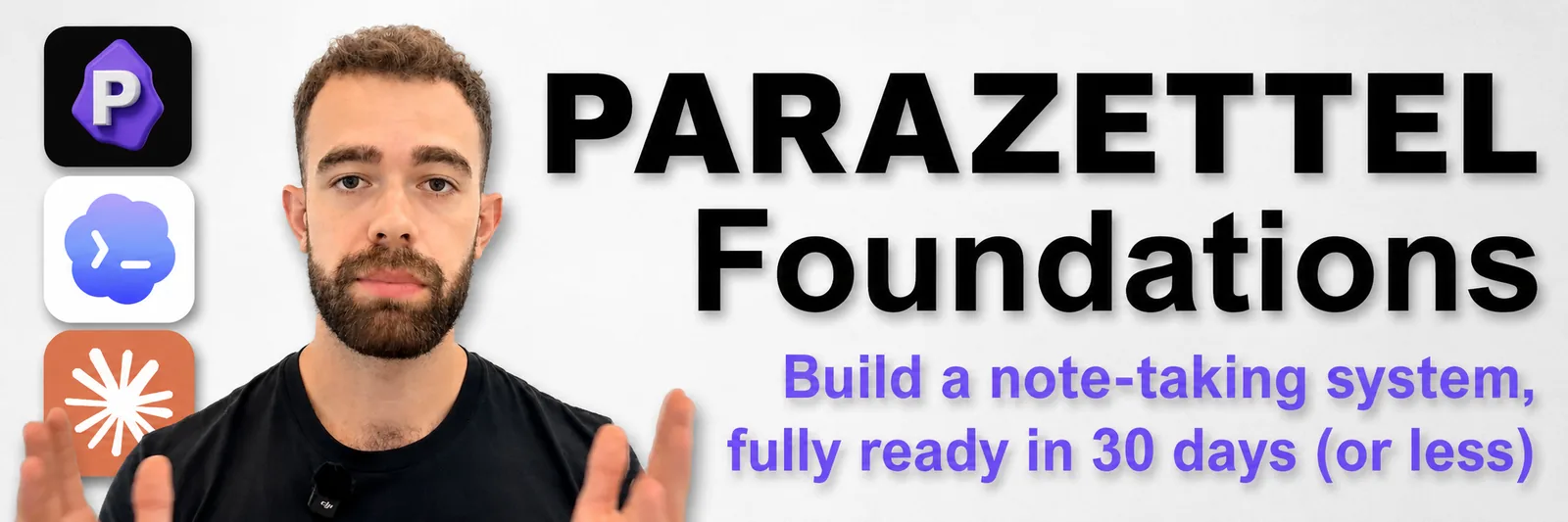
The useful part is not merely that an agent can look through the vault, but that so long as you’ve used a sensible system (such as PARAZETTEL Foundations), the information is already adequately enough structured, so that the other parts of the puzzle, the agent harness and the LLM can work with it.
After all of this building up and talking more about how I was structuring the information generated by the agents, I realised that what the agents were doing for me was more important than how they were storing the information to do so.
Therefore, I started experimenting and writing about what I was getting done with the combo…
AI x Obsidian use-cases in 2026
Once the tools became easier to use, I started using them for practical things instead of prompts for their own sake.
I have written about using Obsidian to build a software platform, ProseLab, for writers, with a friend I met near the start of the year in Vietnam…
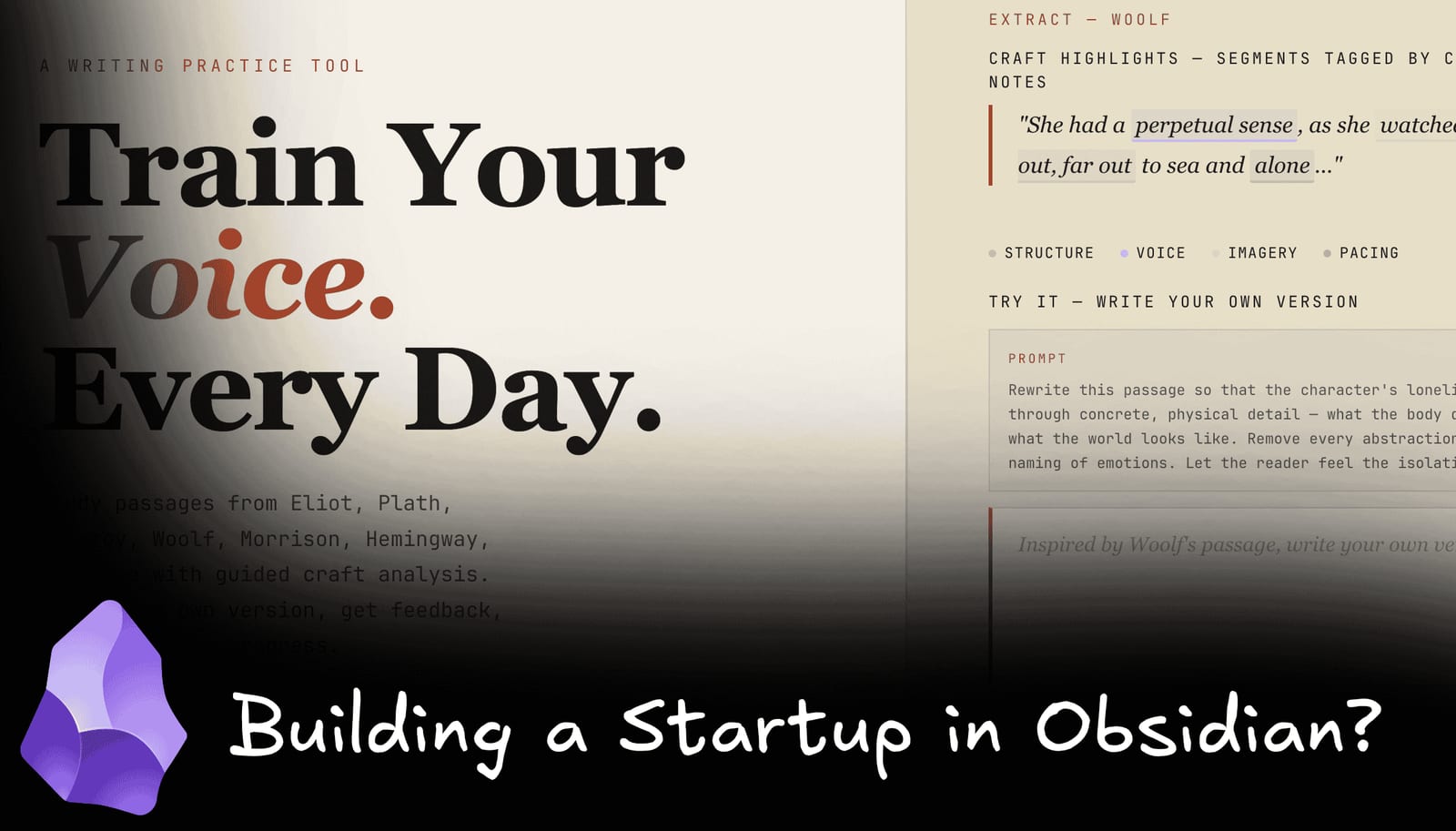
Lessons from founding ProseLab with my friend...
And I’ve been using Obsidian to build websites for much longer, the most recent ones AI-enabled since November (incidentally whilst I was staying at the same place in Vietnam the first time around):
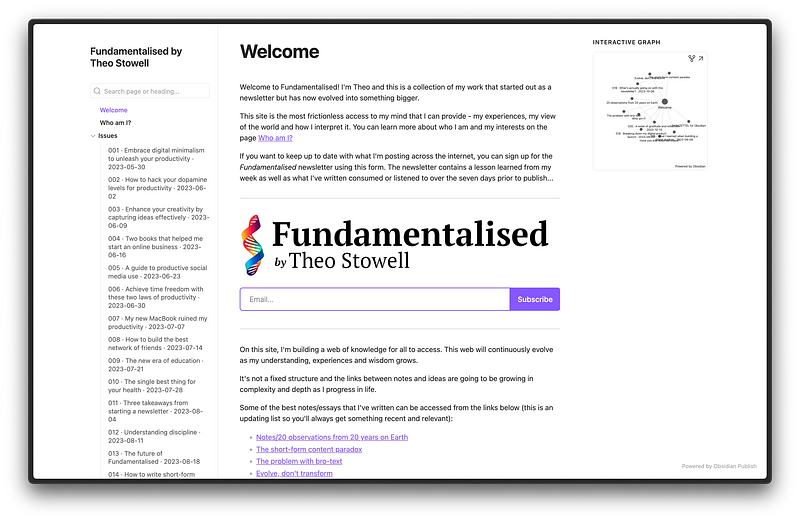
How does the note-taking app perform?
One thing I noticed is that now AI can code for us, we have much more autonomy over how the tools that shape the work we do in our lives exist. My vault is increasingly the point of origin for information about the apps and platforms I want to use for myself, rather than having to rely on a third-party more so. Here’s how I’m building these tools by and large…
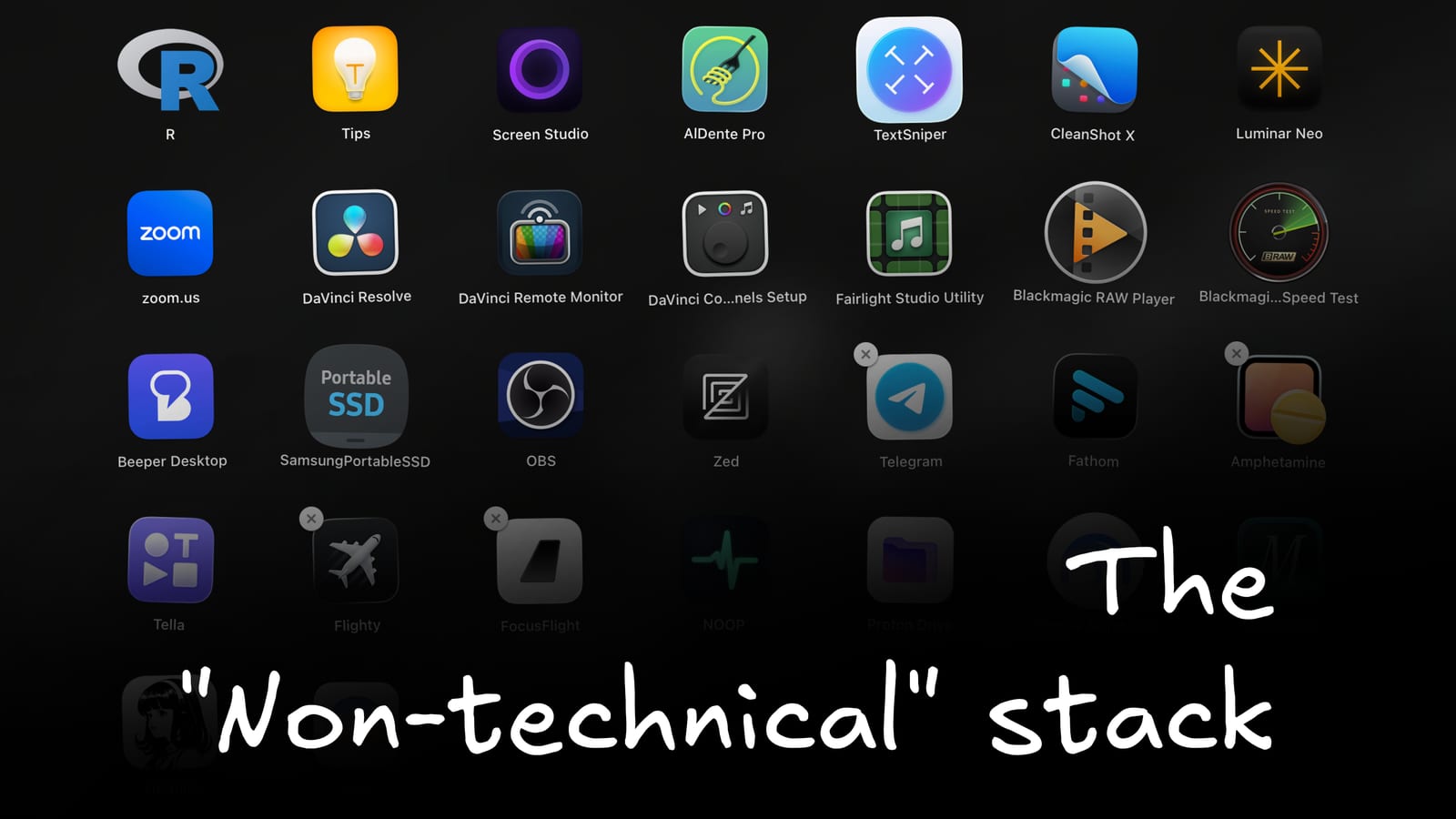
Building on the internet has changed, and I'm using these tools to keep up and build my own solutions...
That is also where Hermes Agent comes in - it’s even more ‘agentic’ (in that it can go off and do things for you) than Claude Code, and it runs on a different machine, if you set it up right it will just be working for you without you hardly having to do anything…
And both connect to Obsidian seamlessly. Here's how I manage it all...
Hermes has become one of the more stable and capable options I have used for that. I am glad I held off while OpenClaw had all the limelight - it seemed a little less reliable and temperamental to set up and use. Nous Research have done a great job with Hermes, and now that I do have it set up, it’s hardly ever any maintenance at all.
I got in at the right time, with enough space to try these tools properly rather than dealing with the mess that the extreme bleeding-edge early adopters had to put up with. Now I can use a local agent for work I want to supervise, and Hermes for repeatable jobs that can run separately from my laptop.
Again, here, we’re harking back to the fact that the point is (and the AI is not good enough to do anything else but this) to get the admin out of the way so I can keep working with the ideas, in the system, the same way we always have…
You do not have to go all-in
It seems for all the world that we’ve entered a new age of AI in note-taking, but that does not mean you need to go all-in to make the most of it.
If you are happy with your progress and how your note-taking works right now, there is literally zero reason to change the way that you’re managing knowledge, just to feel as though you’re keeping up with the crowd.
Obsidian is still perhaps the most powerful tool even when you are not using an AI agent, and you always have the option to add one into the mix at a later date.
AI is a new layer placed on top of note-taking, not a reason to abandon the work underneath it, and so you can keep working, I’ll be here to teach you how to implement the AI layer when you’re ready to do so…
Obssistant - this is where I’m collecting interest whilst I finish a few other projects, we’re going to be sharing details about how we’re going to teach note-taking and PKM in conjunction with agents soon.
And, like I shared with you earlier, if you want to build the note-taking system underneath it first, PARAZETTEL Foundations is where I teach that (it’s more important!).
Thanks for reading! Save this one, you’re going to want to come back to it.