In the past, I’ve written about my idea called Minimal Note-Taking, where you use just enough complexity in your system to not hold you back, and no more.
This piece is going to expand on the before and after you realise you need and learn to implement minimal note-taking, especially before.
Here’s something you should consider — most people don’t need to know that PKM exists. They do just fine taking notes in the way that they’ve taken notes before. Whether this is cracking open a Google Doc to send stuff to a colleague, or just taking notes of their gym sets in their Apple Notes.
And they don’t spend a second considering this entire area of systems, apps and productivity.
I need you to be as effective at taking notes as these people. You might know about Zettelkasten, the PARA Method and everything else. Forget these for a moment, and take it back to an even simpler starting point…
Do you have a genuine reason for taking notes and managing knowledge?
It sounds like a ridiculous question, but you need to answer it truthfully. And what you find out might surprise you.
Let me explain the perspective — there’s been an uprising of anti-PKM content on the internet, people deleting their ‘second brains’ and similar, saying that PKM doesn’t actually help them.
And although I don’t agree with this fundamentally, I understand where they’re coming from. I’ll draw a parallel from my own life experience…
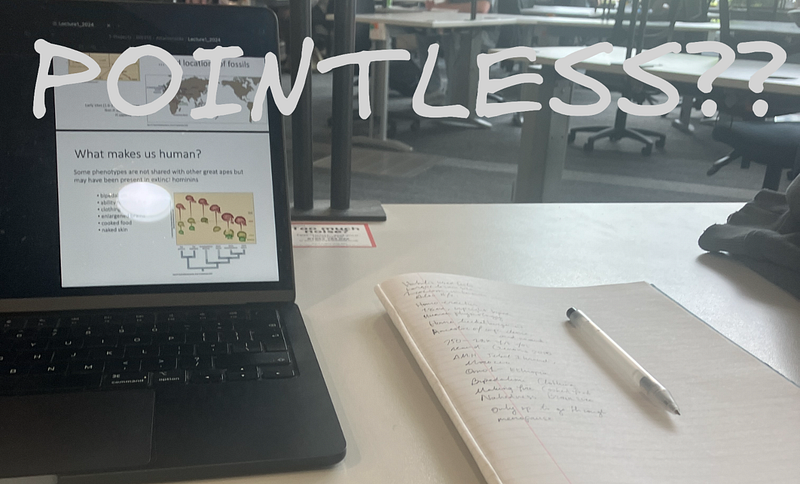
The biggest struggle I ever had with taking notes was back before I went to university, when I was revising for my A-levels. I’d change between Microsoft OneNote and Notion and everything else, just trying to find the right place for my work.
What I know now, but didn’t at the time, is that I had zero genuine reason to be managing knowledge. The only thing I should have been doing was practising maths questions and going over biology flashcards again and again.
But I’d been brainwashed by all the content on the internet to think that I needed notion databases and automatically updating progress trackers and goodness knows what else. I didn’t. Everything that wasn’t related to recall or mastery just got in the way.
And this is what I think that most of the people writing these disenchanted articles are feeling too. They’ve not been able to put their finger on the exact reason why, but they’ve found out that they don’t actually need a PKM system by just deleting their efforts and actually getting on with the work that they needed to do.
And doing these important things made them more satisfied. Who knew?
Now, once you’ve got past this revelation and still believe that you need some way of storing your thoughts and connecting your ideas, this is where the ideas of Minimal Note-Taking become genuinely helpful.
Most people do need a PKM system for the work that they’re doing. They just don’t understand that this could be as simple as using a Word document to write and edit, and then publishing and storing said document in an archive of what they’ve already created.
And this is why I suggest building a PKM system from the ground up.
Think about what you actually need to achieve — hopefully you’ve done that now after considering the above point of potentially not even needing a note-taking system.
Start off with using the simplest tools and methods you can get away with to get the job done. This is building from the ground up.
When you run into a problem with your work that arises because of the lack of complexity or power in how you’re doing things right now, then you can make a change and add a little bit of complexity to the system. Not much — you don’t need databases, you don’t need AI (not yet).
Just enough to get you over the hurdle that you were facing. Maybe it was taking too long to open all the different Google Docs that you were storing, so you started using Obsidian or something similar, so you could search and open notes in the blink of an eye and manage what folders they were stored in easily.
Then rinse and repeat this when you need more optimisation - keep working, doing what you actually need to do, and then when you encounter another problem, solve it using the simplest viable solution.
Eventually, starting from a solution that’s the simplest you could have gotten away with, you end up with a system that never (or very rarely) runs into work it can’t complete.
This is doing PKM the right way. Using Minimal Note-Taking to build from the ground up. So you don’t have to waste time with bloated systems and similar complicated rubbish that was never in line with the real, tangible outcomes that you wanted from managing knowledge anyway.
At points you’ll need to re-evaluate, like if your work role changes and you start doing or creating something else. Then you might have to add things to cross new bridges and continue to create useful output. You might instead have to remove things because your new role or goal is a lot simpler.
Don’t be swayed by all the people showing you their shiny Obsidian graphs and Notion databases. It’s not necessary.
Thanks for reading!