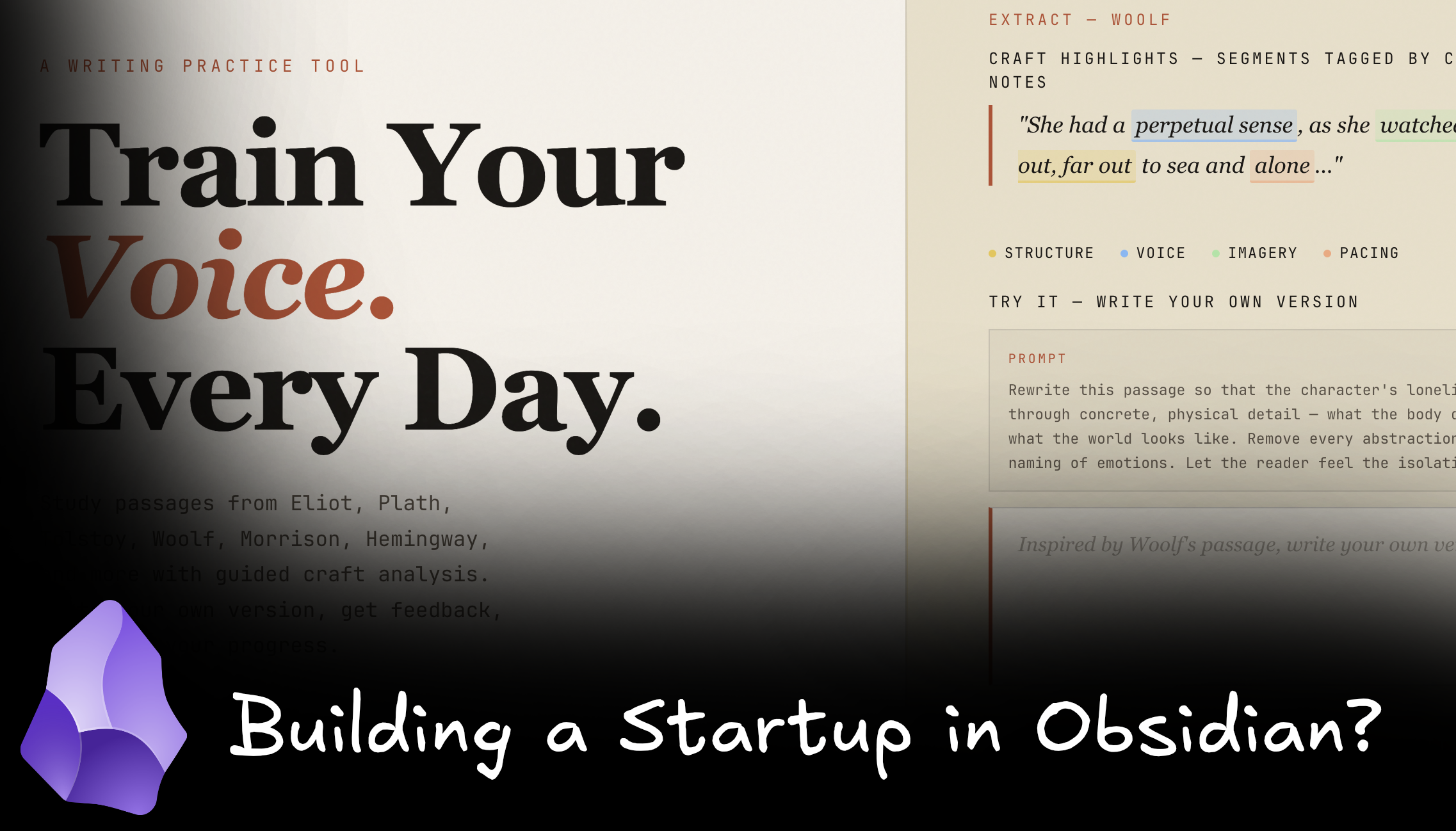
Since meeting a new friend in Da Nang, Vietnam, a couple of months ago, I’ve been building another startup (software), alongside growing PARAZETTEL.
It’s called ProseLab, and today I want to tell you about it, as well as tell you how I’ve been using Obsidian and PARAZETTEL as a system to elevate how effectively I’ve been able to work on the project.
With such a mine of context at my disposal from four years of taking notes in Obsidian for different things, it would have been foolish to start completely from scratch.
First, I’d like to tell you a little more about the project itself…
What actually is ProseLab?
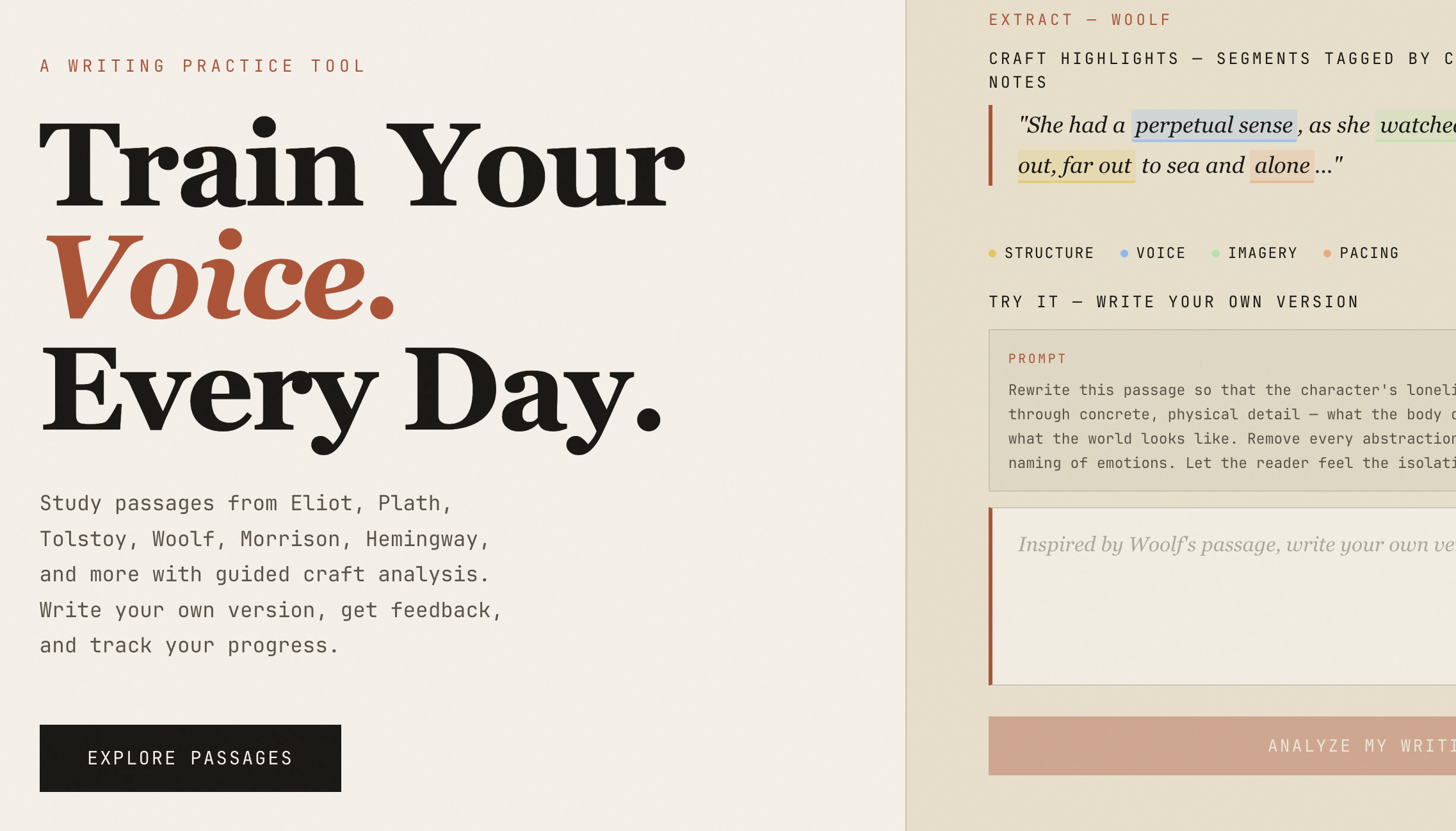
ProseLab’s a writing tool. My cofounder Luca loves crafting short stories and other prose, but he’s at a plateau within the perceived quality of the work that he’s creating.
So he wondered if there was a better way to train than to simply write more. Something more intentional.
Together we came up with an idea for an app that takes passages from the Classics (i.e. works in the public domain), and analyses a few different effective-writing-elements using AI.
We then focus on the element(s) for which it’s an exemplary demonstration, and then challenge the user to rewrite the extract based on a certain prompt. This prompt is designed to challenge the user, and make them realise how the elements used in the Classic extract are effective. For example, using description that’s just about physical appearance rather than feeling (to show how much the abstract matters), and other similar things.
Then AI, using our own proprietary prompt, analyses and returns what the user did well in their own version, what they could improve, and then reiterates how the Classic extract differs from the user’s version and what we’re supposed to learn from this.
We’re very close to finishing building the tool, ready for a launch for public use. However, until this point, you can get a tiny taster of what you’ve got in store if you want, by going to the page below.
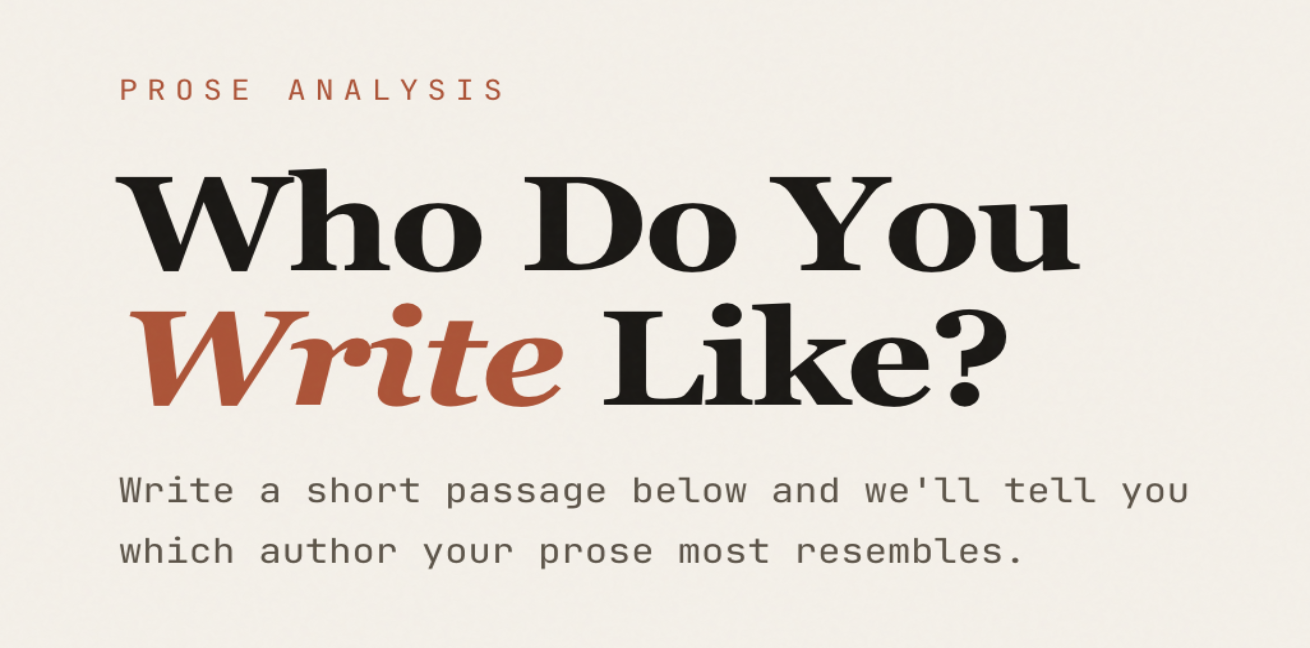
Who Do You Write Like? • ProseLab
Write a short passage and discover which renowned author your prose most resembles. Free prose analysis powered by AI.
My role has been building ProseLab’s landing page and non-technical elements, which I’ve been doing with PARAZETTEL and Obsidian, integrated with Claude Code. More evidence that having a good knowledge management system is useful for other reasons than simply talking about it on the internet.
Anyway, let’s talk about the knowledge management behind such a project, the context behind it and how to use our notes for successful development and progress…
The Obsidian infrastructure for ProseLab
First of all, I’ve not created a new vault to deal with the ProseLab work. The main point I want to transmit - your life and previous work is going to be invaluable. It’ll give you a base to start from, in terms of infrastructure and context, so that you’re not building from zero with every new endeavour.
In terms of actual PKM practice, I’ve created a Resources folder called ProseLab, where all the information is stored as I write it. There aren’t many different files right now, as we’ve just started working on the project, but there are some important ones.
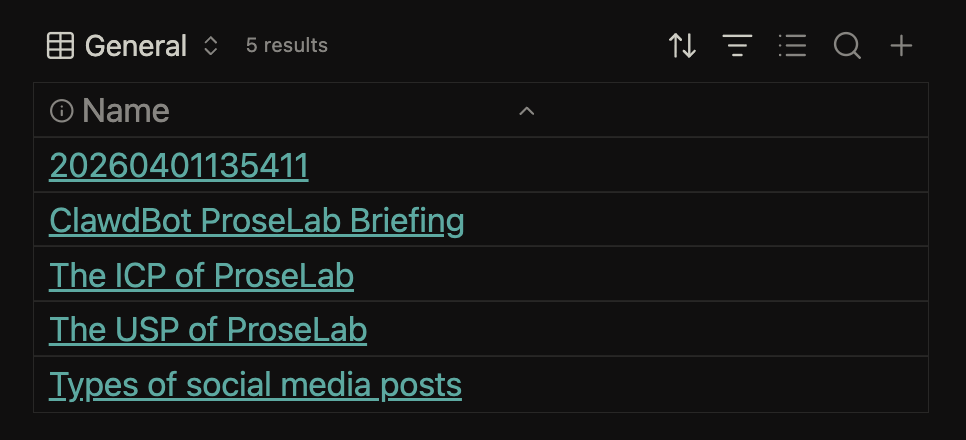
I don’t have to reinvent the wheel when it comes to marketing, because I’ve built an online business before. I have a Resources folder for PARAZETTEL, as well, with all the documentation about tools and workflows I’ve used. I can replicate that infrastructure across to ProseLab.
Context from my other business (PARAZETTEL), as well as personal ideas, can be easily inferred when it comes to making decisions for the new business that I’ve already made successfully with the established one.
And it’s not just marketing and content that having a prior knowledge base can help with, it’s building the business infrastructure as well. Even though PARAZETTEL and ProseLab aren’t similar with what they’re selling (one’s informational products, the other is software as a service), there are a lot of parallels to draw.
I’ve used Claude amongst my other Obsidian vaults (that I use to run my websites) to set up tools that would otherwise take hours of troubleshooting.
DataFast, for example — the tool that I use for analytics. I clipped the docs into my vault using the Web Clipper when I first set it up on the PARAZETTEL site, so that the Claude agent building the site didn’t have to guess how to put things together. It could simply read and execute. When it came to ProseLab, the same docs were already there, and DataFast now tracks the signups and activity for the waitlist.
Here’s the most recent set of stats:

The same is true for Stripe, which now runs payments on both sites. Their new managed payments tool isn’t exactly straightforward to set up. But I’d already clipped the docs into my vault when I first configured it for PARAZETTEL. When it came to ProseLab, Claude had that context ready and the setup was close to flawless.
I didn’t have to write new prompts or figure things out from scratch. I used the previous context stored in my vault(s) to make sure that things were set up and initiated in the way that I wanted.
I used to preach keeping things quite simple, and only taking notes if you really thought they’d make a difference in the future, but now there’s more of a utility to larger quantities of documentation and capture. Even now, I keep these docs stored both in the personal vault repository, so that I can draw on them at any time, and in the other website repos (which are also Obsidian vaults), so that I don’t waste time around setup and troubleshooting.
Claude, through many sessions working together, has ingested everything I’ve created manually in the ProseLab folder, adding the information into its knowledge graph.
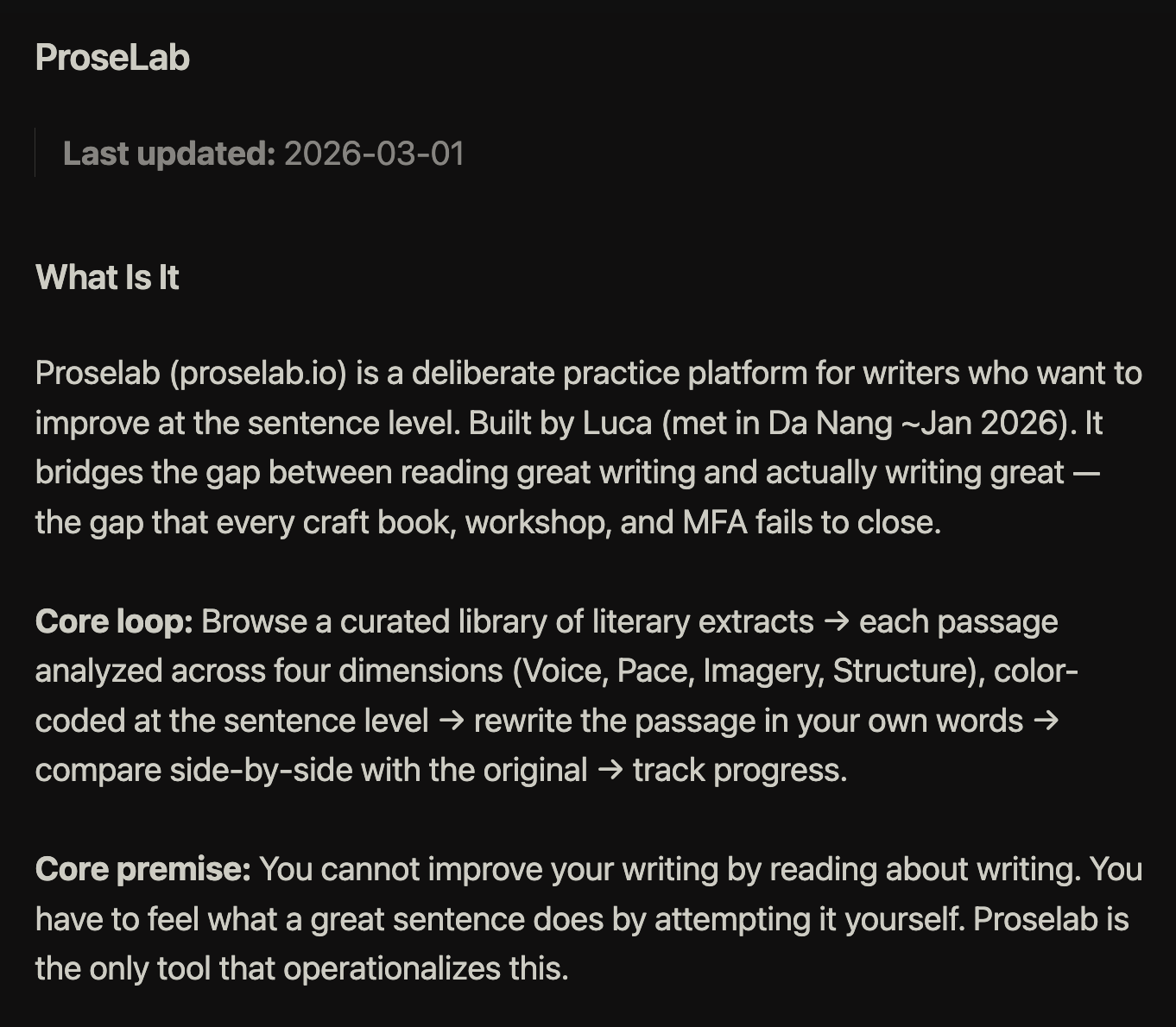
Through this, the agent has as good a base as myself to start from when developing ideas for marketing, providing outlines for articles and posts, and prompts for developing slides and animations.
For ProseLab, it’s working. We’ve hit our first 1,000 followers across all platforms. The waitlist is growing steadily, and traffic to the website is climbing week on week.
We would have moved much slower without AI (it goes without saying), but an underrated part of the process is having a full-fledged knowledge management system you’ve been using to work on previous projects that you can simply drag ideas and context from, and store notes and resources related to upcoming plans for the launch and further.
An increasing number of projects that I’m putting together are making use of PARAZETTEL and PKM, without being related to teaching PKM and related ideas on the internet. The system I built to teach note-taking is now the system I use to build software.
Thanks for reading!
If you’d like me to help build Claude Code into your Obsidian vault, setting up its own second brain and basic skillset, then you can learn more and book in a call with me @ PARAZETTEL.com/ai