For a long time I thought I was set on my software decisions, even writing regularly about how bad switching choices all the time is…
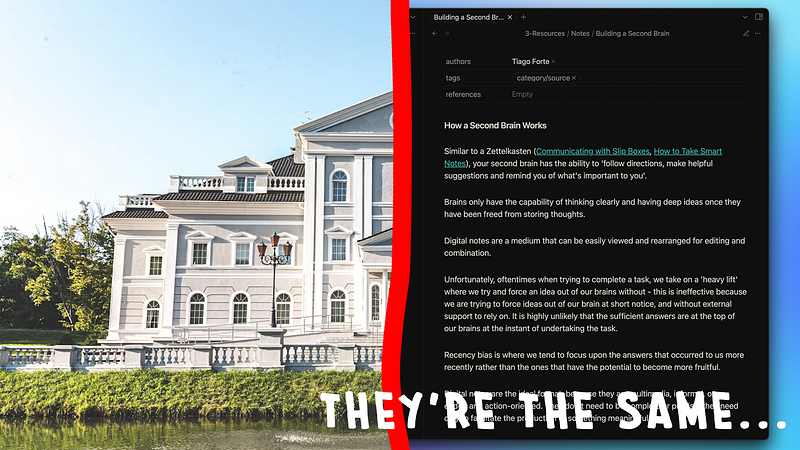
Let me explain this analogy — so effective I'm embarrassed I didn't think of it sooner…
Well, that has changed because at this time in the progress of technology, we seem to be ushering in a new paradigm of information collection and management.
Right now I’m actively deleting apps, because I’ve found a better alternative — speaking to an AI agent and creating the same outcome.
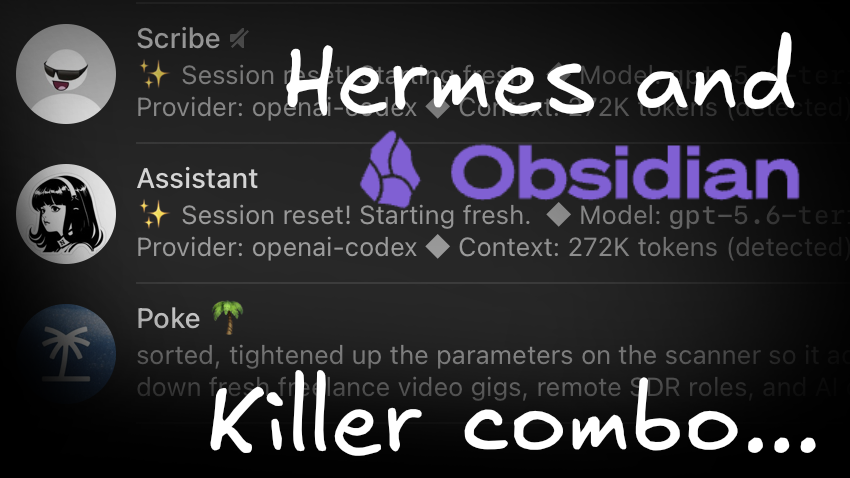
That agent is Hermes Agent, a self-improving AI agent built by Nous Research. Combined with Obsidian (that is, on a device that can access my personal Obsidian vault), it has started replacing tools and (arguably) doing a better job.
But first, let me recap how I set the agent up in general…
How I set up Hermes x Obsidian
I keep Hermes on a VPS, a server up in Manchester that’s not my own. I also sync my Obsidian vault there using headless-sync from Obsidian, so the agent can work from the same notes and context that I use on my local laptop.
I explained the broader local-and-cloud configuration in my recent piece on the assistant-and-intern setup. The important part here is that the assistant can read the context I have already built, then carry out approved work without me needing to sit in front of a terminal…
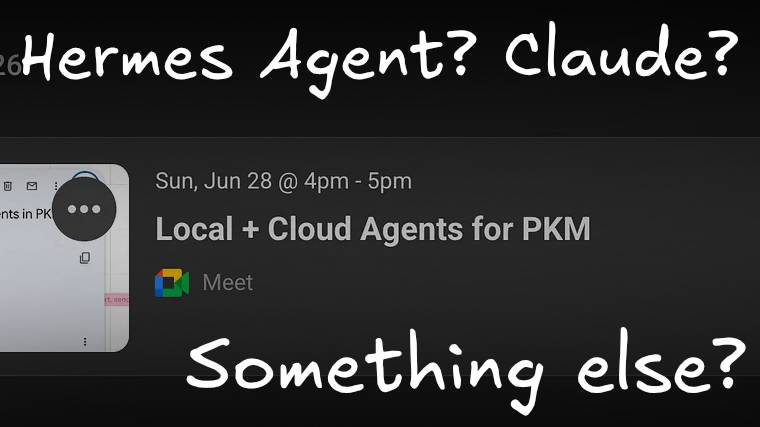
And both connect to Obsidian seamlessly. Here's how I manage it all...
I have also attached Hermes to a Telegram bot. That gives me an assistant I can reach from anywhere to work with my notes and GitHub repositories, rather than a collection of apps I have to open one by one.
And as a combination, this is what is starting to replace custom-built software in my day-to-day stack.
A custom, streamlined, and offline CRM
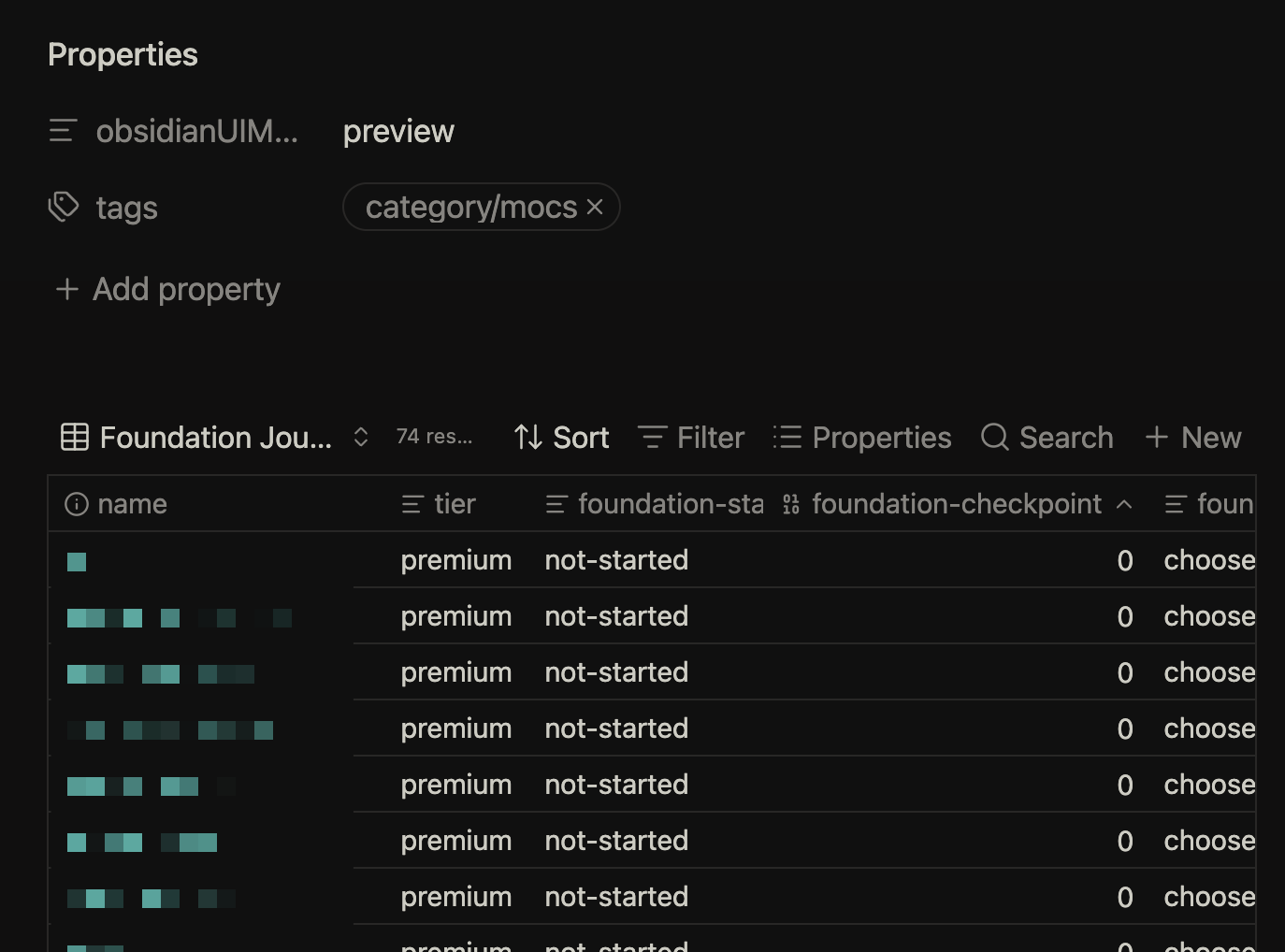
I have never really used a proper CRM app.
Unless you count Kit for sending emails and keeping track of people like that, I was mostly managing community relationships through a mixture of memory, spontaneous decisions and largely avoiding things :/
So I created a CRM in Obsidian for the PARAZETTEL community and Foundations (simply by prompting Claude at the time). It synchronises with Kit through their MCP, meaning I can easily update it and have the changes synced to the most active subscriber touch-point.
This means that I don’t need to waste time trying out things like HubSpot or whatever other bloated nonsense might be out there as a CRM these days. I’ve got something that does the job, with the tools that I’m using.
The next thing I want to wire in is Skool, which means that if I can get this done, anyone that joins Foundations will immediately be synced to my personal CRM and to Kit and start to receive the lesson emails with no delay, and also no input on my side.
In truth, there isn’t a lower-friction way of doing things — you set things up once, with a little overhead in terms of effort, and then you’ve got the workflow that you own, ready to act when new information comes in.
That’s one of the examples of a larger process I’ve taken in-house (as it were), but there are other utilities that I’m managing to replace with better alternatives as well…
An AI task manager that acts for me
The only features I ever wanted from a task manager were simplicity and a quick capture mechanism so I don’t forget my thoughts.
I could have installed Todoist, Things, or any of the other popular solutions, but instead I just created another Hermes profile…
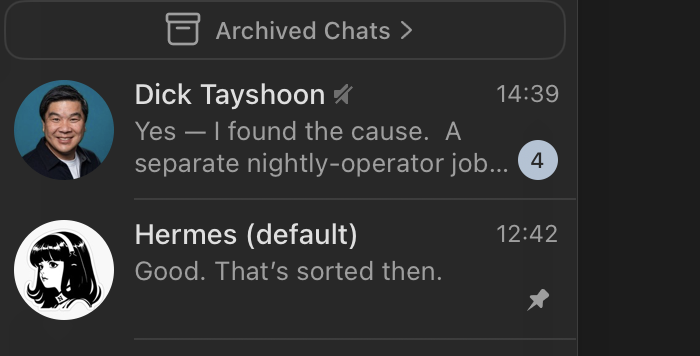
Its primary job is to take what I say, flesh it out, and leave it as a note inside my Obsidian inbox. My default Hermes agent can then process that note overnight.
All I have to do is open the messages on Telegram, and drop in a short or long voice note, and no matter how garbled or jumbled my thoughts are, there are downstream processes in place to make sure that the idea is fleshed out and ready for me to go if I come back to it and decide it’s worth pursuing.
I tested it out on a run yesterday, and luckily with Telegram’s voice note design, it’s even functional enough for me to transcribe ideas whilst I’m in motion (not bad considering I used to be the person who had to stop walking to type something in with a phone keyboard, I’m not good at multitasking).
There are other things I want to do with this combination at some point too, which I’ll explain next. But I also want to make the case for keeping things simple, even when great tools are this accessible…
Ideas for the future
Take Strong, my workout app. It’s a fantastically designed piece of software, and I’ve used it religiously since 2023 as it’s the best on the market. But it’s still a drag to keep it open and record things throughout a session.
I have a feasible plan to build a personal trainer into Hermes, another profile like the one I made for task management. I could speak the details into it:
“Okay, I’m entering the gym now. Today we’re going to do legs.”
…
“Warm-up set of 120 kg for six squats. Felt great and no back pain.”
The agent could put that into a richer database based on what I have exported from Strong. It could make the tracking more natural, keep the useful context around the session, and offer suggestions if I decide to build out a programme towards a particular goal.
However, the fact that I can replace an app doesn’t mean that I should make it my number one priority…
Shiny object syndrome has never been as shiny. You have to be very selective with what you want your Hermes agent to do and how you want it working with your notes in Obsidian or you’ll end up with a hot mess that provides no value.
I am still learning that skill, and am building out processes that help the agents work out where they are going wrong, stay focused, and keep themselves in check.
This means I still have to use my discernment — it’s still on me to decide what is worth automating before I hand it over.
That is where Minimal Note-Taking comes back in (or at least the principles, we can call it minimal-agent-implementation).
The point is not to make the most complicated system possible because an agent can now maintain it. The point is to keep the system focused on the work that changes something.
From me to you — keep this in mind and remember what you’re trying to get done before you build a 40-step agent workflow for something that’s not actually parallel with your work.
Anyway, that’s Hermes x Obsidian in the process of replacing all the apps that I’ve been using, some of them for many years. I hope that it’s given you some inspiration.
•••
PARAZETTEL Foundations is the programme I am building to teach sound note-taking practices from scratch.
You can head to the Foundations home page to learn more about the contents and whether it’s for you.