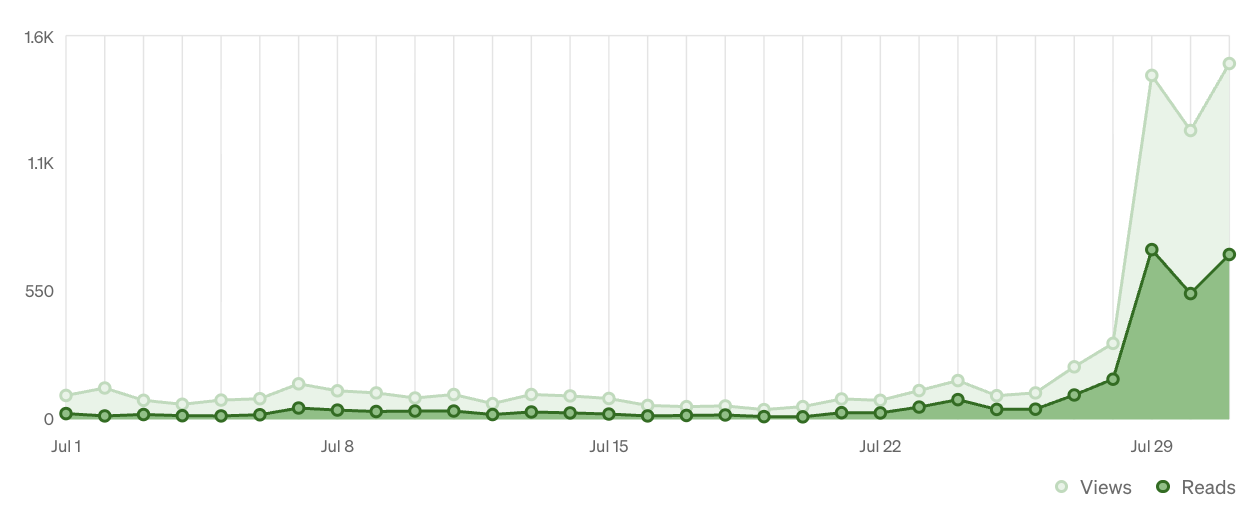
One of the recent pieces I wrote about Hermes and Obsidian has taken off, getting 2K+ reads in the last few days, so I want to extend things and talk a little more about my workflows in general, rather than the apps that are replaced…
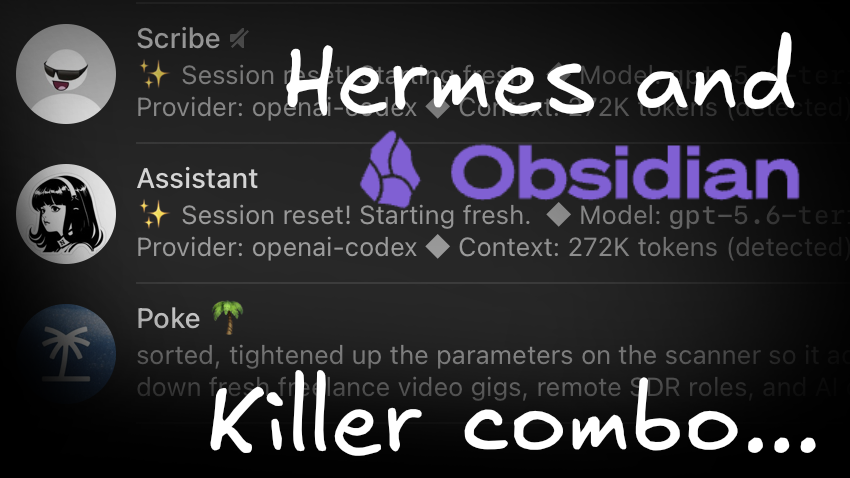
Here's how I'm custom-building alternatives that are even better...
Although the idea of having an autonomous agent that runs on no more than an OpenAI subscription and hosting expenses is appealing, it doesn’t work straight out of the box.
You have to do some configuration, and the decisions around what tasks are automated are completely on your shoulders (which can be problematic at times, which I talk about at the end of this piece).
To start though, I’m going to break down what my agent actually does for me whilst I sleep at night, why it’s useful, and some advice on setting up your own version…
How Hermes came to be part of my workflow
Things were going well back at the start of the year when it came to using AI with notes.
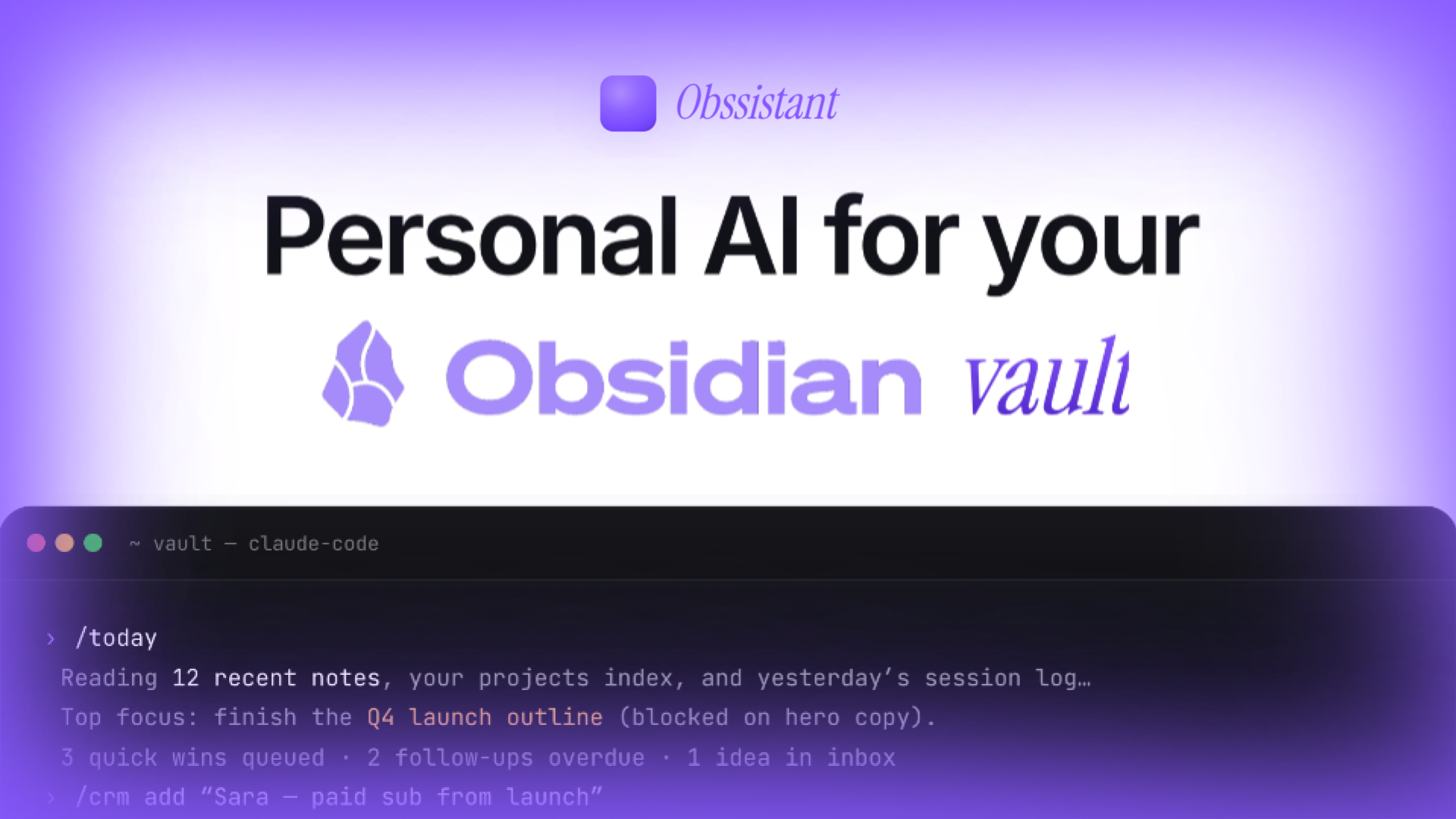
I was an early investor in using Claude Code with my vault from the command line, building out first the new PARAZETTEL.com website, and second an integration with my personal notes. My articles on the latter topic were just as popular as my one on Hermes from the other day…

How I turned it into a personal assistant that lives in my Obsidian vault and learns my workflows…
However, I was keeping my eye on something else that was becoming popular on Twitter as well. That one thing was OpenClaw (formerly Clawdbot), the original agentic agent.
For a while, OpenClaw seemed a little bit too complicated to set up, so at the time I decided not to.
Over time Hermes Agent came around, and this seemed like a better solution, more stable, where non-technical people were able to get it set up and working without it crashing. It’s run by a more organised and deep collective of people rather than just what started with a single developer for OpenClaw (then Clawdbot).
I started setting things up, first with a done-for-you service through Hostinger, and then I moved to a much cheaper solution with IONOS once I had the hang of things, relying on Hermes to configure itself rather than for Hostinger to do it for me.
I write more about the initial configuration in my personal assistant and intern piece, so I’m not going to cover it today, but I’ll enlighten you on how things work generally…
Hermes Agent’s role in my life
Hermes has access to my notes through Obsidian headless-sync, which I’ve talked about before. The machine that stores my Hermes (that stays awake all the time so it can act independently) also has access to the files that I write to my vault on my machine, making it completely integrated into my PKM.
Overnight I have some processes in place, and from the outside looking in it might be hard to make the links as to how these things are happening and built, but I’ll explain them in the rest of this piece, starting with the section below.
The most important part, and the part I hope you’ve been doing already, is taking notes in a great system, so that the agent has some structured data to work with in terms of context about you and what you do.
If you have not, you’ll probably like PARAZETTEL Foundations, where I’m teaching how to build that sort of system for yourself.
It briefs me every morning
When I wake up and open my vault, Hermes brings together what I’ve been working on in the past days and creates a little summary for me.
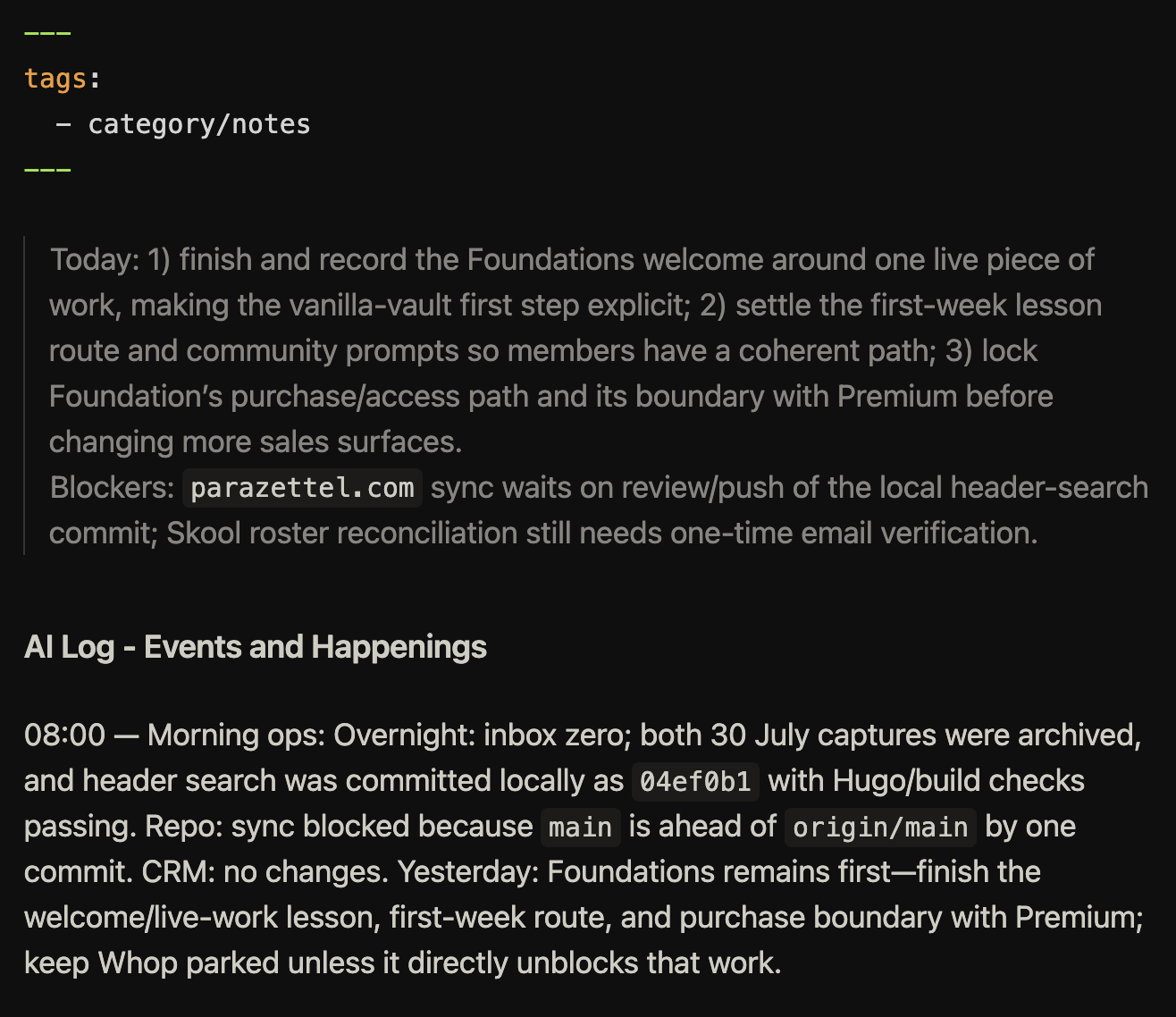
It also suggests some articles that are worth writing on the day, based upon ideas and outlines that I’ve captured in the past, so it’s not spawning irrelevant ideas out of nowhere (again another reason that your agent should be tied in with your notes and context).
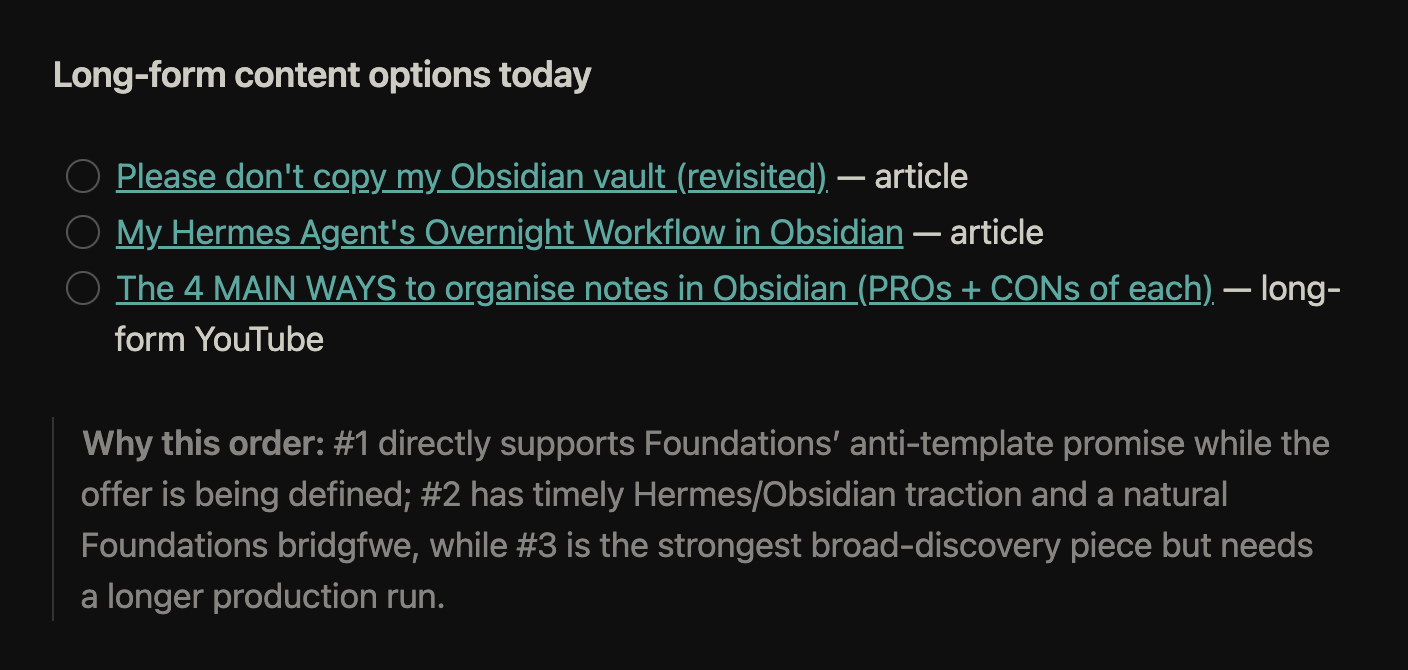
I’ve been bad with article consistency in the past, and I’ve realised that everything good that happens for PARAZETTEL hinges on the teaching that I do across YouTube videos and especially Medium articles.
Sometimes you need someone in your face screaming so that you really get up and do the work, because I’ve been guilty of slacking off in the past.
Look at the last two years in comparison to my output in 2023, and guess which was my most formative and successful year? The one that I wrote more than 100 articles in, and got this entire process off the ground for the first time.
So I’ve been trying to build this out, making sure that Hermes doesn’t overload me, and instead building a solution that encourages doing the right work, not just any work.
Some of the admin in Obsidian can even be completed without my permanent oversight as well now…
It processes my inboxes overnight
Hermes has a dedicated loop that it runs on my Obsidian vault overnight as well, doing a few simple cleanup and admin jobs.
It goes through my inbox, remembering and archiving the pieces that I’ve captured off the internet with the Obsidian web clipper (which is becoming increasingly important as AI-integration becomes more powerful).
It reads the stuff that I’ve captured myself, from my own head too, makes sure to update its context, and then processes this stuff forwards, whether that is recommendations for the next day or content suggestions on the content page.
Most inbox captures are really just ideas that I need to either discard or action quickly, so instead of storing things in a note, the agent processes them into a little task list on the inbox’s index note…
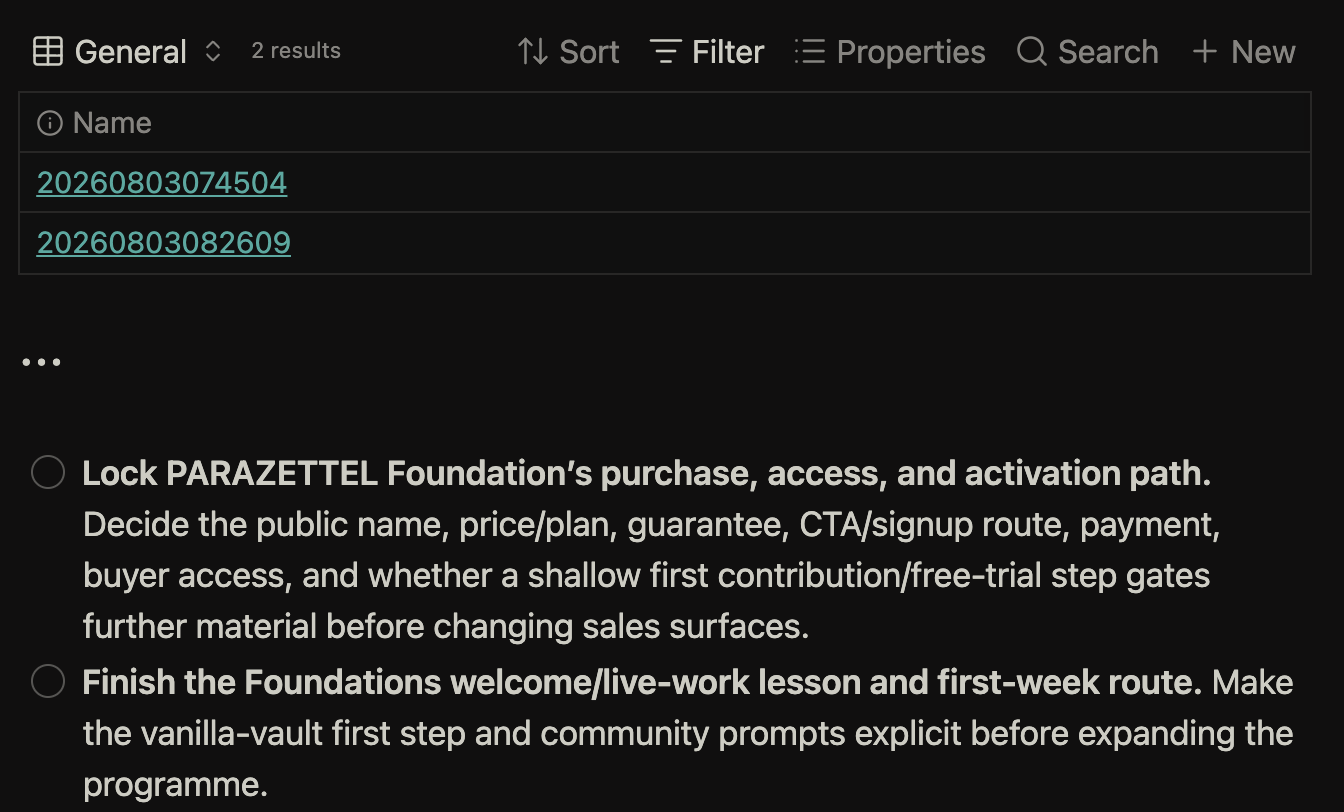
So when I wake up the next day, I’ve got a quick list of tasks I have to process, rather than drawn out ramblings in unidentifiable notes that I need to open, triage and process individually.
Hermes is similarly helpful at the end of the day too…
It rounds off the day nicely
Each evening, Hermes rounds off the day and actively asks me for a summary so that it can update my daily note (to put a nice finish to the same style of progress capture that I do by habit throughout each day now).
This summary is useful when the agent comes back later to process the progress that I’ve made throughout the day and select what should be the priority for the upcoming day as well. Even though the morning job could figure this out all the same, it makes the job easier to have one concise and purpose-written summary that it can draw from for progress updates.
All of this to say that I’ve become a rather large proponent of periodic notes. There’s a new one every day (meaning things don’t get cluttered), and they can become long-lasting inside your system, building up a lot of links.
The Calendar plugin is still the best way to overview these notes as well…
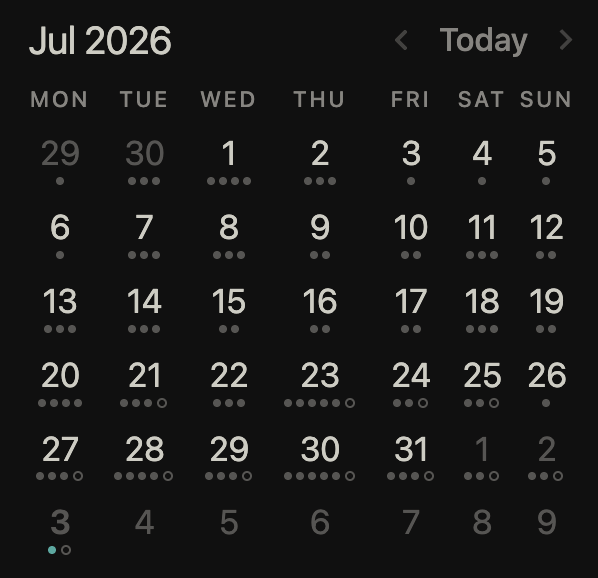
Even though it has not been updated in three years, it does the job of a little overview. It shows you what’s written on certain days, and the quantity of notes that are there too, and provides a ‘paper trail’ as such so that you can go back and verify what you were working on at certain times.
Should you set this up for yourself?
I want to finish with a cautionary piece of advice around whether you should actually be doing all of this, and it links back to good PKM foundations.
Realistically, hiring someone (or something) that can clear up the clutter in your vault and give you an organised place to work from for the day is very rarely a waste of time.
Pair the shortcuts that can be made with QuickAdd to add bits and pieces into the daily note and inbox over time (effortlessly, at the press of a hotkey), with a notification in Telegram to make sure that my agent notifies me to round up the day once it’s done, and it’s really powerful.
However, I don’t want you to let yourself believe that it’s some kind of magic wand. The setup for Hermes if you’re a first-time, non-technical user (like myself, learning SSH and VPS hosting for the first time) can be a little complicated, and sometimes breaks (but I’ve not had to deal with the system breaking in ages).
I’ve got more planned around how I’m using Hermes and Obsidian as a combination, including how I’ve built a CRM for people who enter my email lists and community, so follow if you’d like to be in the loop when that goes out.
That’s all for today though!
If you want to learn more about my system for notes and build your own Obsidian vault based upon this, you should check out PARAZETTEL Foundations…

Helping professionals, students and creators get started with PKM and note-taking in Obsidian, using PARA Method, Zettelkasten, useful AI and more.