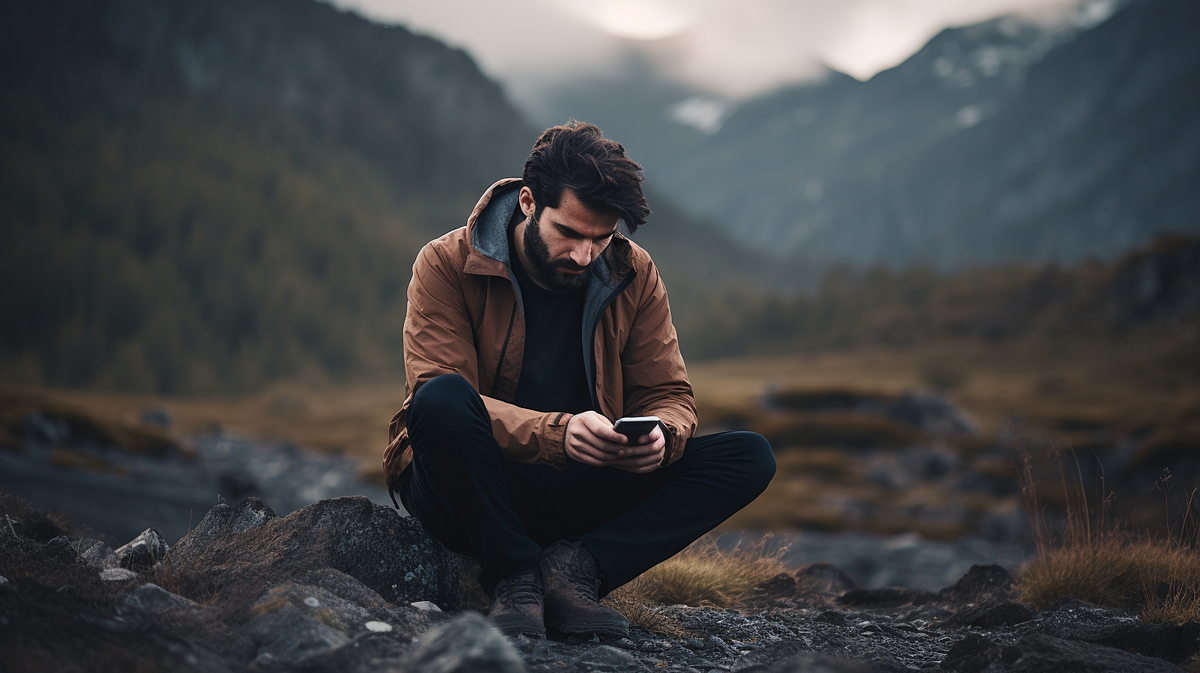
Since receiving my first phone three years ago at 16 years of age, I’ve had a personal Instagram account.
I was late to the party in comparison to the majority of my peers, and after finally opening an account, I enjoyed being able to keep up with them digitally as well as in real life.
Or so I thought.
For the last year, however, I’ve become increasingly aware of my compulsive actions around using the app. This lead me to the belief that I had a behavioural addiction to Instagram.
This would make sense, considering the platform has been engineered for you to spend as much time on it as possible. Your attention is valuable to large social media companies, and they will harness it by any means necessary.
Enough was enough. It was time to quit.
This decision turned out to be the initiation of a year-long battle to regain control of my mind over Meta, and it’s only today that I get to write the story of how I deleted the Instagram app for good.
Let’s get started…
So how come I got addicted to Instagram?
Addiction is a powerful word.
Using it spawns mental images of crackheads and drunks, along with other examples of addictions to substances to the point of abuse.
Behavioural addictions are also very powerful, however, and in my experience, they slip further under the radar because they aren’t something you can see on the outside of a person.
Fighting the addiction was an experience I felt that I had to undergo by myself, away from the eyes of others.
There’s a molecule in your body, a neurotransmitter, called dopamine. I’ve written in-depth about how this molecule can be harnessed for good or for bad but put simply, Instagram uses an algorithm that analyses your activity on the app to show you posts that are most likely to stimulate a positive or negative reaction from you.
When you open the app, you never know what content you’ll encounter next, which creates a sense of anticipation. When you see a like, comment, or new post that you find stimulating your brain releases dopamine, which motivates you to keep scrolling for access to more stimulating content.
This leads to a downward spiral of continual scrolling to find the next dopamine hit.
Instagram have engineered features to enhance this addictive effect too, like the infinite scroll of recommended content without a way to change the fact you see this on the first screen that opens when you click the app.
They don’t want you to leave.
How did I get out then?
I tried, failed, learned and tried again many times.
Instagram have a policy that means they hold your account deletion for a thirty-day period before deleting your data. The idea is that you can get back into your account if you change your mind about the deletion.
All you have to do is simply log back into your account to recover it. Decide to try deleting again? Too bad, you’ll have to try and wait out another 30 days with impeccable willpower to have it removed.
Not good. Not good at all for those who are suffering from behavioural addiction to the platform.
In fact, it’s worse than not good. It’s no different to having substances readily available for rehab patients during their period of recovery. A bold statement to make, I know, but I was continually quitting and, a few days later, relapsing again, logging back into the app for a quick scroll.
Restraining was like holding myself under cold water and the initial feeling of reopening the app during a relapse was like stepping out of the cold water to be enveloped in warmth again.
I tried app blockers, uninstalling and app blocking, changing the password and changing the email, but it was just so damn easy to get access to the app again when I was feeling unmotivated.
One recent evening, everything changed.
I was scrolling again, instead of sleeping, and I felt a drive within me that it was finally time to quit for good.
I gathered all the experience I’d gained from countless attempts to forsake the platform, walked over to my laptop, sat down and got to work.
Executing the master plan (how to quit):
Instagram wasn’t going to help me in any way. They wanted me to stay where I was.
That much was clear.
I needed a foolproof method of ensuring that I wouldn’t be able to get back in the app, even when the craving became unbearable.
Before we get into how I effectively banned myself from the app, I want to address a prerequisite:
Losing contact with the people you’re following is one of the least attractive aspects of quitting Instagram.
Let them go. The ones you truly care about? Get their phone numbers. WhatsApp them.
Harsh as this may be, if you don’t feel like it’s worth asking for a phone number from them, they deserve to be left behind. Cultivate close connections with people you care about and who care about you in return.
Once you’ve collected contact details for the most important of your friends on the platform, it’s time to make your exit. Here’s how I did it…
The first step was identifying all the details that allowed me access to the account:
- Linked Facebook account
- Password
- Username
I aimed to destroy all of these links so that I couldn’t get back into the account if I wanted to, even when the urge was at its strongest.
Opening Meta Accounts Centre, I unlinked the Instagram account from the Facebook account. This was the easiest step.
One down, three to go.
The password was the next to change. I typed a random string of the most obscure characters to exist (so it wouldn’t be saved on my clipboard — that’s how thorough I was being), entered it as my new password, verified the new password and immediately forgot it.
The same procedure was applied to the account username — I typed a string of crap into the field, pressed save and forgot what I typed, without trying to save it.
I generated a temporary email address with SimpleLogin and submitted it as the new primary email for the Instagram account, deleting my real email from the system.
I was careful to verify the new email address, before removing it from existence, without remembering it. I simply deleted it from the SimpleLogin system. Now that’s Instagram’s recovery emails sailing through an empty corner of cyberspace.
Done!
Actually, not quite.
I took one more precautionary step before deleting my account. There’s a 2FA app that I use for logging into my account in my university’s ecosystem, called DUO, and it supports 2FA for Instagram accounts.
Perfect.
I created a 2FA link with my phone, and promptly deleted the app’s knowledge of this link. Now, even if I managed to get past the fact that my Instagram account had an unknown username and password, an email that doesn’t exist and no Facebook account linked to it, I wouldn’t be able to authenticate my access to the app through a second factor.
The final step was to delete the account in the Meta Account Centre. The usual ‘30-day hold period warning’ came up, but this time I didn’t dread the time between now and then.
And that’s where it ended. I haven’t used Instagram since that night.
That brings us to the present day.
What do I do now, seeing as I’ve regained hours of my time back from death-scrolling?
I write. I’ve been publishing on Medium since the start of the year, and the practice is becoming more fulfilling with each story I post. I’ve begun growing a Twitter account too, to find an audience for my short-form content and advice.
I no longer see myself as addicted to Instagram, and I’ve ended a one-year personal battle with the most degrading social media service I had in my life.
I’m grateful for you reading my story and reaching all the way to the end of it. To the people who are reading and want to quit in the same way that I did…
Keep persevering. I hope the experiences I’ve described here help you realise I’ve been in exactly the same place that you are right now, and I’ve fought my way out. It can be done. Please do try the strategies that have been included in this article, I believe that they’re the best way to detach yourself from Instagram.
Never give up. I believe in you.
If you know someone who could benefit from reading this piece, please show it to them and be kind, understanding and encouraging.
If I can help even one person fight their social media addictions, this piece will have more than done its job.